
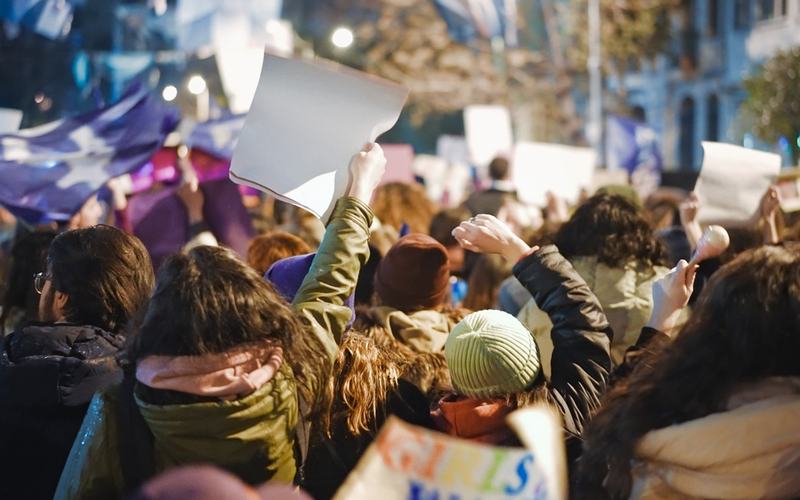
Thousands of young people marched through Milan, Rome and Turin on Saturday, with police and military personnel deployed to prevent a repeat of the clashes and looting that erupted during demonstrations the week before. Most protests in Italy remained peaceful, although brief confrontations with police occurred in Rome and Turin.
In Milan, Premier Giorgia Meloni’s government sent an additional 500 soldiers to reinforce security, adding to hundreds already stationed in the city. Around 5,000 police and other security personnel supported the operation, which included drone surveillance, railway station checks, rapid-response units and online monitoring for potential calls to violence.
Luxury retailers in Milan’s fashion district, including Omega, Tiffany and Gucci, boarded up their storefronts ahead of the demonstrations. The Apple store also closed and remained shut after other businesses began reopening. Last weekend, rioters broke into shops near the central Duomo square, targeting sneakers, athletic clothing and sporting goods.
Saturday’s march through Milan remained largely peaceful, with demonstrators chanting against Meloni and carrying signs criticizing the state. Protesters also dumped manure outside Italy’s energy regulator and burned an oversized symbolic electricity bill. The march concluded peacefully outside Milan Polytechnic, more than two miles from the city center.
Meloni’s government has announced tougher penalties for minors following last weekend’s unrest, in which police said young people made up a substantial portion of the participants. Authorities said approximately 2,000 young protesters were involved in the violence and looting in Milan. Police arrested 45 people over two days, including 34 minors. Several minors were also detained preventively ahead of Saturday’s demonstrations.
Officials are investigating a 30-year-old freelance journalist described as the alleged “mastermind” of the newly formed Oct. 17 movement, which has helped drive the recent protests.
A small group of approximately 30 far-right activists associated with Inter Milan’s soccer supporters also appeared during the demonstrations, chanting anti-immigrant and anti-Muslim slogans. Police kept the group isolated from other protesters.
In Rome, authorities increased security around luxury shopping streets and major public gathering places. A small number of demonstrators attempted to enter the Colosseum but were escorted out by guards. Several hundred students separately marched peacefully, emphasizing that they did not support the violence.
A separate anti-war demonstration in Rome briefly clashed with police near Piazza della Repubblica. Organizers attempted to restrain the crowd, but confrontations continued until police deployed a water cannon. Demonstrators then withdrew to another location.
The unrest extended beyond Italy. In Albania’s capital, Tirana, riot police used water cannons against protesters who threw projectiles and set fires at government buildings. Authorities said 2,500 officers were patrolling the city Saturday. Students have demanded lower tuition fees, increased government investment in education and action against corruption. Some have joined a wider opposition movement calling for Socialist Prime Minister Edi Rama to resign.
Rama said his government was preparing a response to students’ demands and invited them to dialogue, while warning that those involved in violence would face penalties. A separate opposition demonstration outside the prime minister’s office also turned violent earlier Saturday.
Elsewhere, thousands of retirees and other demonstrators marched peacefully in Madrid to oppose potential changes to Spain’s public pension system. The protest came ahead of next month’s snap election, amid a political dispute over claims that the conservative Popular Party could move toward privatizing pensions. Spain has also experienced demonstrations over rising housing costs.
In Lisbon, protesters demanded more affordable housing and criticized measures introduced by Prime Minister Luis Montenegro’s government. The proposals would ease limits on annual rent increases and make it easier to evict tenants who fail to pay. Montenegro’s government says the changes would strengthen trust between landlords and tenants and improve the rental market, while opponents argue they could leave renters more vulnerable.
The demonstrations reflect a broad range of grievances across Europe, including education costs, government corruption, housing affordability, pensions and opposition to war. Italian authorities’ extensive security operation sought to prevent last weekend’s violence from recurring as protests continued across the region.

Comments
No comments yet. Be the first to share your thoughts.