
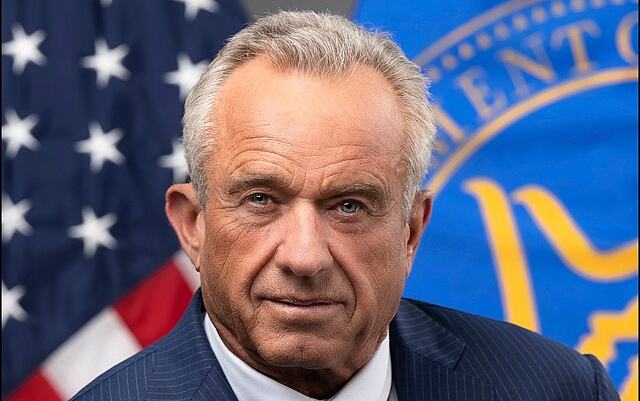
Health Secretary Robert F. Kennedy Jr. is planning a broad federal initiative to investigate reported vaccine injuries, including a new research program at the National Institutes of Health and a proposal that would compensate doctors for reporting serious vaccine-related side effects.
Kennedy discussed the initiative during an unannounced visit to the NIH campus in Bethesda, Maryland, this week, where he and other senior health officials met with patients who believe they experienced injuries following vaccination.
The effort could establish a vaccine injury research program at the NIH Clinical Center and potentially expand the work to additional research centers across the country.
The Department of Health and Human Services and NIH have already taken steps toward the initiative. Two notices posted in June outlined plans to improve the collection and analysis of data involving vaccine injuries. One called for large-scale studies examining vaccines and their potential relationship to both positive and negative long-term health outcomes.
The administration is also considering a new medical billing code that would allow doctors to receive reimbursement for submitting reports of serious vaccine side effects. Supporters of the effort argue that improving reporting could provide researchers with more comprehensive data about rare adverse events.
HHS did not respond to requests for comment on the initiative, while a spokesman for NIH Director Jay Bhattacharya also declined to comment.
Serious vaccine-related injuries are considered rare, and public health authorities have long maintained that the benefits of vaccination outweigh the risks for most people. At the same time, vaccine safety researchers have said additional research into adverse events could be useful if conducted under rigorous scientific standards.
Dr. Helen Chu, a former member of the CDC's vaccine advisory committee, said adverse events should receive greater attention in future scientific research. Dr. Daniel Salmon, director of the Institute for Vaccine Safety at Johns Hopkins University, likewise said additional vaccine safety research could be valuable but emphasized the need for rigorous scientific methods.
Kennedy's long-standing skepticism about aspects of vaccine policy has made him a controversial figure among public health officials. He has questioned the safety of certain vaccine ingredients and has called for research into possible connections between vaccines and conditions including autism and chronic disease. Numerous studies, however, have found no causal link between vaccines and autism.
The proposed initiative also reflects concerns from patients who believe their vaccine-related symptoms have not received sufficient attention from the medical establishment.
One of the patients who met with Kennedy at NIH was Brianne Dressen, a former Utah preschool teacher who participated in an AstraZeneca COVID-19 vaccine clinical trial.
Dressen told The New York Times that she developed tingling in her limbs within an hour of receiving the vaccine in November 2020, followed by worsening pain and other symptoms. She said her condition eventually became severe enough that she temporarily required a wheelchair and lost 40 pounds.
After contacting the NIH Clinical Center in January 2021, Dressen said doctors diagnosed her with "post-vaccine neuropathy." She later founded React19, an organization that advocates for research into COVID-19 vaccine side effects and long-term symptoms.
"This is the first time there's been anything even remotely official," Dressen said of the federal effort.
Kennedy's NIH visit reportedly included Centers for Medicare and Medicaid Services Administrator Mehmet Oz, CDC Director Erica Schwartz, and acting FDA Commissioner Kyle Diamantas.
The initiative would represent a significant expansion of federal attention to vaccine safety and adverse-event research, although the specific structure and scope of the proposed program have not yet been finalized.

Comments
No comments yet. Be the first to share your thoughts.