
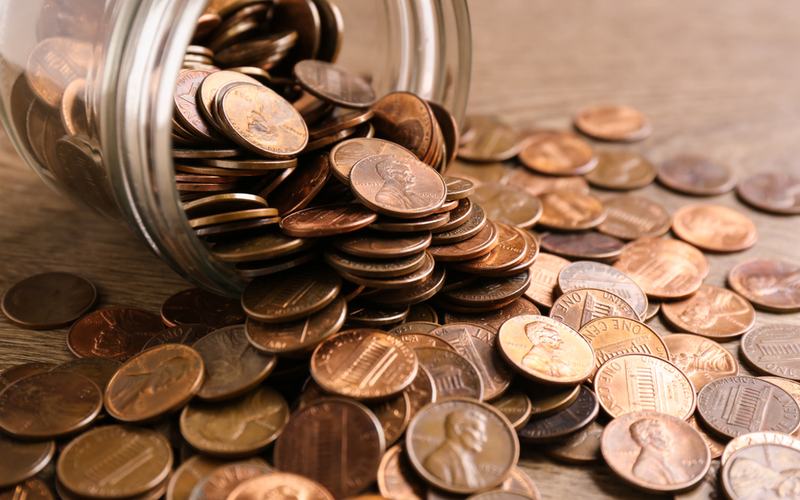
The federal government has officially ended production of the penny after President Donald Trump signed the bipartisan Common Cents Act on Friday, making the move to discontinue the coin part of federal law.
The legislation passed both the House and Senate by voice vote, reflecting broad support for ending production of a coin that costs more to manufacture than its face value. Rep. Lisa McClain, R-Mich., who sponsored the bill, said producing a single penny costs nearly four cents and argued that eliminating production would save taxpayers $85 million annually.
The U.S. Mint estimated last year that discontinuing penny production would generate approximately $56 million in immediate annual savings. The Mint stopped making pennies in November 2025, about nine months after Trump called on the Treasury Department to halt production, describing the process as wasteful. The government will continue producing limited quantities of pennies for collectors.
Although new pennies will no longer be minted for general circulation, the coin remains legal tender. The law states that pennies can still be used to pay debts, taxes and other public charges. The Treasury Department has also said the Federal Reserve will continue circulating the estimated 114 billion pennies already in existence for as long as possible.
The Common Cents Act establishes a procedure for businesses that accept cash to round transactions to the nearest five cents. The change is intended to help retailers handle cash payments as pennies gradually become less available.
The legislation also allows the nickel to be manufactured with a zinc core and a nickel exterior, replacing its current composition of nickel and copper. Zinc is less expensive, potentially reducing the cost of producing the five-cent coin.
The penny has been part of American currency since the nation’s early years. Congress passed the Coinage Act in 1792, and the U.S. Mint began producing the cent the following year. The first penny, introduced in 1787, featured a sundial design created by Benjamin Franklin.
The coin underwent several changes in size, composition, and design over the centuries. Early versions featured Liberty, chain links, a flying eagle and an “Indian Head” design. In 1909, the penny adopted its familiar image of President Abraham Lincoln, marking the 100th anniversary of his birth.
The most recent design was introduced in 2010 and features the Union Shield on the reverse side. The U.S. Mint said the shield represents Lincoln’s efforts to preserve the United States as one nation.

Comments
No comments yet. Be the first to share your thoughts.