
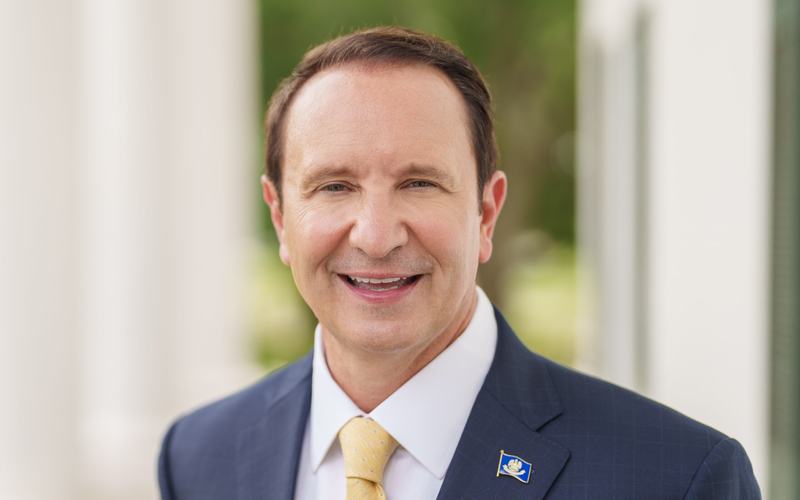
Louisiana's top elected officials announced Thursday that the state's congressional primaries scheduled for May 16 will not go forward as planned. The decision follows a U.S. Supreme Court ruling the previous day, striking down the current congressional map as an unconstitutional racial gerrymander.
Gov. Jeff Landry, a Republican, and Attorney General Liz Murrill issued a joint statement asserting that the high court's decision in Louisiana v. Callais effectively prohibits the use of the existing map for elections. They plan to work with the legislature to draw a new map before rescheduling the primaries. Landry informed Republican congressional candidates of his intent to suspend the May contests, allowing time for redistricting amid the ongoing legislative session that ends June 1.
The Supreme Court, in a 6-3 decision authored by Justice Samuel Alito, ruled that the state's 2024 map, known as Senate Bill 8, violated the Equal Protection Clause by relying predominantly on race to create a second majority-Black district. District 6, currently represented by Democrat Cleo Fields of Baton Rouge, stretches about 250 miles from Shreveport through Alexandria, Lafayette, and Baton Rouge to achieve a Black voting-age population exceeding 50%. The majority held that Section 2 of the Voting Rights Act did not compel the additional majority-minority district, providing no compelling interest to justify the race-based design.
This map stemmed from a 2022 litigation where a federal court found the initial post-2020 census plan diluted Black voting power, as Black residents comprise about one-third of Louisiana's population but held only one of six seats. The legislature responded with the second district in 2024, but non-Black voters challenged it as racially discriminatory. The Court updated the Thornburg v. Gingles framework for Section 2 claims, requiring plaintiffs to disentangle race from partisanship and provide alternative maps meeting state goals like incumbent protection.
Justices Clarence Thomas and Neil Gorsuch concurred, with Thomas arguing that Section 2 should not apply to districting at all. The liberal justices, Elena Kagan, Sonia Sotomayor, and Ketanji Brown Jackson, dissented, warning that the ruling eviscerates Section 2 protections against vote dilution.
Murrill hailed the decision as ending federal coercion of racially discriminatory maps and upholding equal protection. Legislative leaders, including Senate President Cameron Henry and House Speaker Phillip DeVillier, both Republicans, pledged immediate action on a remedial map. Democrats, including Rep. Fields and Rep. Troy Carter, decried it as undermining minority representation.
The suspension affects only congressional races; other May 16 contests, such as the U.S. Senate race for Sen. Bill Cassidy's seat and state Supreme Court positions, will proceed. Absentee voting has begun, and early voting starts Saturday, complicating logistics for election officials. A new map could restore Louisiana's previous 5-1 Republican House delegation ahead of the November general election.

Comments
No comments yet. Be the first to share your thoughts.