
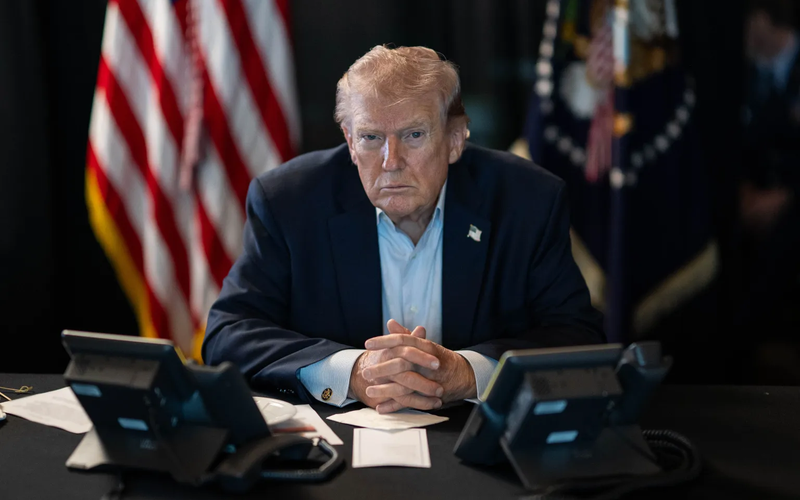
President Donald Trump escalated his public feud with German Chancellor Friedrich Merz on Wednesday by announcing that the United States is considering reducing its military footprint in Germany.
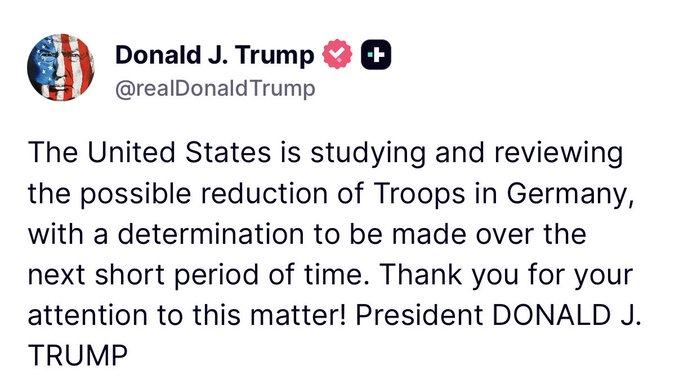
In a post on Truth Social, President Trump wrote, "The United States is studying and reviewing the possible reduction of Troops in Germany, with a determination to be made over the next short period of time." The statement came one day after Trump accused Merz of believing it was acceptable for Iran to possess a nuclear weapon.
The dispute traces back to comments Merz made on Monday at a high school assembly in Marsberg, western Germany. There, the chancellor described the U.S.-Israeli war against Iran as "ill-considered" and lacking a clear exit strategy. "The Americans obviously have no strategy," Merz said, drawing parallels to the U.S. experiences in Afghanistan and Iraq. He added that Iran had humiliated the United States, particularly through its negotiating tactics that stalled talks, such as refusing direct meetings until a U.S.-enforced blockade on Iranian ports is lifted.
Merz stated, "An entire nation is being humiliated by the Iranian leadership, especially by these so-called Revolutionary Guards." He emphasized the economic fallout for Germany from soaring oil prices caused by the conflict.
Trump fired back on Tuesday via Truth Social: "The Chancellor of Germany, Friedrich Merz, thinks it’s OK for Iran to have a Nuclear Weapon. He doesn’t know what he’s talking about!" He further remarked, "No wonder Germany is doing so poorly, both economically and otherwise!"
Germany hosts between 35,000 and 38,000 U.S. troops, the largest concentration of American forces in Europe. These bases, including the headquarters of U.S. European Command, provide critical logistics support, such as aircraft maintenance and medical care, and have served as staging points for operations in the Middle East amid the current war.
The war, dubbed Operation Epic Fury, began on February 28, 2026, with U.S. and Israeli strikes aimed at dismantling Iran's nuclear program and capabilities. Now in its second month, the conflict has led to a U.S.-led blockade of Iranian ports and stalled negotiations, with Iran refusing talks until restrictions ease. European allies, including Germany, a major arms supplier to Israel, have declined to participate militarily or help secure the Strait of Hormuz.
Trump previously sought to reduce U.S. troops in Germany during his first term, ordering a withdrawal of 12,000 in 2020 over NATO spending shortfalls, though the move was halted under President Joe Biden. Any new cuts could face resistance from Congress and logistical hurdles, especially with ongoing Russian threats to NATO's eastern flank.
Neither the White House nor the German embassy offered further comment Wednesday evening. Merz stated earlier that day that U.S.-German relations remained good despite the spat.

Comments
No comments yet. Be the first to share your thoughts.