
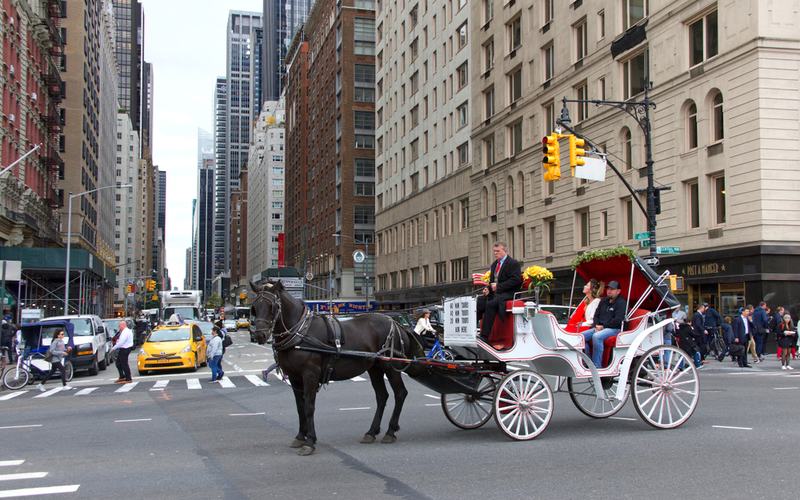
New York City lawmakers are preparing to end the city's horse-drawn carriage industry, a tradition that has operated for more than 150 years and become a familiar feature of Central Park. The City Council is expected to vote next week on legislation that would prohibit the rides by 2028, following renewed public safety concerns after an 18-year-old tourist died in a carriage accident last spring.
A spokesperson for City Council Speaker Julie Menin confirmed the upcoming vote and said the proposal has enough support to pass. Mayor Zohran Mamdani's office also confirmed that the mayor had reached an agreement with Menin on the legislation.
“The horse carriage industry is coming to an end in New York City,” Mamdani said in a social media post.
The latest push to eliminate the industry began in June, when Romanch Mahajan, an 18-year-old visiting New York City from India, died after jumping from a runaway horse-drawn carriage while riding with family members. According to his family's account, the horse bolted and Mahajan's mother was thrown from her seat, prompting him to jump in an attempt to help her. His death appeared to be the first fatality involving a horse-carriage accident since the rides began in Central Park.
Mahajan's family has since appealed directly to city officials, attending hearings at City Hall and participating remotely from India to urge lawmakers to end the rides. His father, Deepak Mahajan, described the family's grief during a hearing last summer.
“We are shattered, our whole family shattered. The pain does not go away,” he told council members. “Every morning we wake up and think of nothing but the loss of our son.”
Animal welfare activists have opposed the carriage industry for decades, arguing that horses should not be required to navigate busy city streets and crowded park areas amid traffic, pedestrians, and other distractions. Previous incidents involving horses collapsing, becoming startled or running into vehicles and other objects have repeatedly revived calls for a ban.
Menin said the fatal accident demonstrated the need for a change in city policy.
“The tragic and preventable death of 18-year-old Romanch Mahajan made clear that the status quo is no longer acceptable,” she said. “Horse-drawn carriages have long been part of New York City's history, but in an increasingly busy Central Park, this tradition has become a growing public safety liability.”
Supporters of the industry, however, argue that the rides remain an important part of New York's tourism appeal and cultural identity. Horse-drawn carriages have appeared in numerous classic films, including The Band Wagon, Barefoot in the Park and Home Alone 2: Lost in New York, reinforcing their association with the city's historic image.
Conor McHugh, a longtime carriage driver, told the City Council earlier this year that the attraction draws visitors from around the world.
“Taking a horse and carriage ride in New York City is one of the most iconic things to do in New York City,” McHugh said, arguing that the rides remain a recognizable part of the city's appeal to tourists.
The proposed ban has also generated opposition from labor representatives concerned about the livelihoods of carriage drivers and other workers who depend on the industry. Previous efforts to eliminate the rides have repeatedly stalled amid political disputes over employment, union opposition and the future of the horses.
John Samuelsen, international president of the Transport Workers Union, criticized the latest proposal, arguing that it fails to provide adequate economic support for affected workers. He accused Menin of using the teenager's death to justify what he described as a manufactured public safety crisis.
“This is disgraceful political opportunism, and Zohran should not simply go along with it, particularly when immigrant families' livelihoods are being destroyed,” Samuelsen said. “This entire situation is reprehensible.”
Under the proposed legislation, the mayor's office would be required to develop a workforce transition plan for carriage drivers. The bill would also allow the city to consider compensation for industry workers. Additionally, carriage owners would be prohibited from selling their horses for slaughter, with the legislation requiring that the animals be handled in a “humane manner.”
Mamdani acknowledged the economic consequences for workers and said the city has a responsibility to address them. “I think we have a civic responsibility to ensure that we are not leaving anybody out to dry,” he told reporters Wednesday.
The proposal follows unsuccessful efforts by previous mayors to end the industry. Former Mayor Eric Adams called for its elimination near the end of his administration, but the proposal failed to advance. Former Mayor Bill de Blasio also pledged to end the rides when he took office, only to abandon the effort amid opposition from labor unions and a public campaign supporting the carriage industry that included actor Liam Neeson.
New York City has introduced several regulations intended to protect the horses and improve safety. Existing rules require the animals to receive at least five weeks of vacation annually outside city limits, with daily access to pasture. Veterinarians inspect the horses twice a year, and they cannot continue working beyond age 26. Carriage operations are also prohibited when temperatures exceed 89 degrees.
If approved, the legislation would bring an end to a longstanding New York City tradition while forcing officials to address competing concerns over public safety, animal welfare, tourism, and the livelihoods of workers who depend on the industry.

Comments
No comments yet. Be the first to share your thoughts.