
Until now, Mexicans deported from the United States were sent almost exclusively back to their country by air and land. Only a handful arrived in other countries.
Guatemalan President Bernardo Arévalo confirmed Wednesday night that, so far this year, 2,284 Mexicans deported from the U.S. have arrived in his country. "They are arriving in planes of Guatemalan returnees," Arévalo said.
The deported immigrants would then be transferred to their home country within 24 hours, with transportation costs covered by Mexico or the U.S.
However, Mexican officials rejected the practice, saying they are at work to repatriate citizens deported to Central America, without specifying the number of cases or costs.
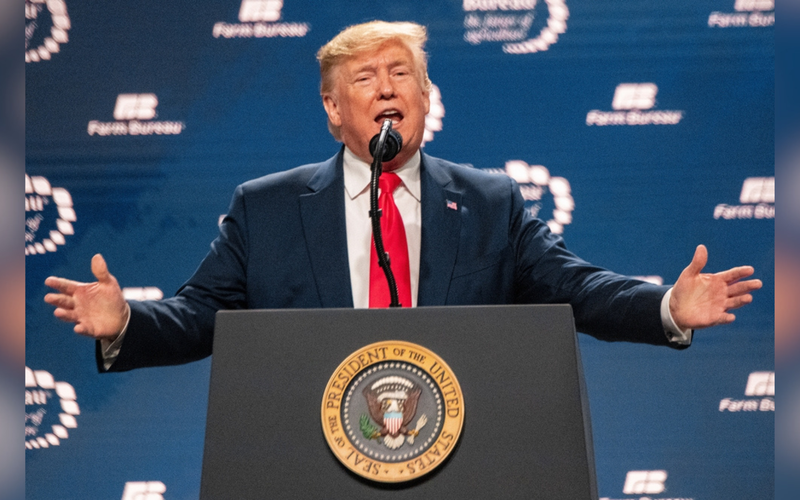
In response to recent decisions by the Trump Administration, a spokesperson at the U.S. State Department reaffirmed the department's commitment to existing policies.
"Implementing the Trump administration's immigration policies is a top priority," they said. "We remain unwavering in our commitment to end illegal and mass immigration."
Under international accords, deportees are usually sent directly to their country of citizenship. Migrants may be sent to third countries if their home country rejects them or if the conditions are unsafe.
This has raised ethical concerns regarding deportation, as some argue that there are more variables for people to get lost mid-transfer between connecting countries or that human rights would be violated while in third-world countries.
Others argue the arduous process will disincentivize Mexican immigrants from crossing back into the United States.
Mexico has historically agreed with the US on receiving deported citizens.
Since Trump’s first term, Mexico has also accepted deportees from third countries, although the details of immigration agreements with Washington have usually been unclear.
Between 2022 and 2023, Mexico agreed to accept up to 30,000 migrants, mostly Cubans and Venezuelans, according to figures provided by Mexican President Claudia Sheinbaum.
The Associated Press spoke with immigration lawyers regarding this alternative form of deportation, with some believing the Trump Administration is using deportations to third countries as a legal loophole to indirectly force asylum seekers to return to Mexico when the government cannot send them there because it would violate court orders from immigration judges that recognize the dangers.
Trump supporters will see that this is the President fulfilling a campaign promise, as the United States becomes more aggressive with deportation efforts of illegal immigrants.
Critics will draw attention to protection concerns of the deported migrants, with Central America director at migrants rights group WOLA, Ana Maria Mendez, noting the rerouting tactic left migrants uncertain of their destination.
"What we are seeing seems part of a broader trend towards a very severe U.S. migration policy where they seek to instill terror and fear in migrants at all costs," she said in an interview with Reuters.

Comments
No comments yet. Be the first to share your thoughts.