
The U.S. military is testing new technology designed to detect and destroy drones near the U.S.-Mexico border as officials respond to an increasing number of unmanned aircraft linked to cartel activity.
The testing took place during Falcon Peak, a U.S. Northern Command exercise held in September in Arizona. Soldiers watched demonstrations involving radar systems, interceptor drones, autonomous weapons and other equipment designed to locate, track and neutralize small unmanned aircraft.
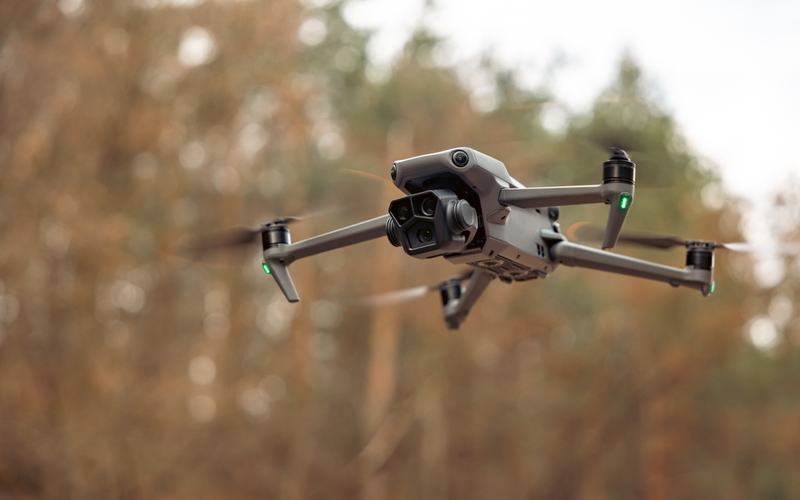
Army officials said most drones encountered along the southern border are commercially available systems rather than sophisticated military aircraft. Criminal organizations use them primarily for surveillance connected to drug smuggling and human trafficking operations.
Brig. Gen. Brian Filler, deputy commander for operations at Joint Task Force Southern Border, said the military detected 378 drone incursions during the previous 30 days and that the number was continuing to increase.
“We are seeing largely commercial off-the-shelf available drones,” Filler said, adding that most are equipped with surveillance cameras and are frequently observed in connection with cross-border activity.
The military has already begun deploying counter-drone weapons along the border. Earlier this month, officials said the Army had used laser systems to shoot down 11 cartel drones since the technology was deployed in August.
The border also provides the military with an opportunity to test counter-drone systems under real-world conditions rather than relying solely on controlled laboratory testing. Officials said cartel drones are not comparable to the more advanced systems being used by militaries on battlefields in Ukraine and the Middle East, but the encounters provide soldiers with an operational environment in which to evaluate equipment and tactics.
The push is also influenced heavily by the rapid development of drone warfare during Russia's invasion of Ukraine. Drones have become central to battlefield operations in the conflict, while Ukrainian and Russian forces have repeatedly modified both offensive drones and systems designed to counter them.
U.S. military planners are seeking to adopt that same rapid cycle of testing, modifying and redeploying technology rather than relying on lengthy development timelines.
“We tend to look at Ukraine and we say, 'I am so impressed with how quickly they can adapt on a daily or weekly basis,'” Brig. Gen. Matt Ross said. “What we should really do is replicate that process.”
The Falcon Peak demonstrations also highlighted the Pentagon's growing reliance on private defense technology companies. Since Russia's invasion of Ukraine in 2022, billions of dollars have flowed into venture-backed companies developing drones, artificial intelligence, sensors and counter-drone systems for military applications.
Among the systems demonstrated was Anduril's Ghost drone, along with a radar and camera-based detection system from Teledyne FLIR. Allen Control Systems demonstrated its Bullfrog automated machine-gun system, while Powerus displayed an interceptor drone designed to engage other unmanned aircraft.
The Army's effort reflects a broader shift in how the military views small drones. Systems that were once largely associated with commercial photography and hobbyists have increasingly become tools for surveillance, targeting, smuggling and warfare.
For U.S. officials operating along the southern border, the challenge is not only stopping individual drones but developing systems that can identify threats quickly, distinguish criminal activity from ordinary commercial drone use and respond without creating unnecessary risks to people on the ground.
The military's testing program is intended to give troops experience with those challenges while accelerating the development of technology that could be needed against increasingly capable drone threats in the United States and on future battlefields.

Comments
No comments yet. Be the first to share your thoughts.