
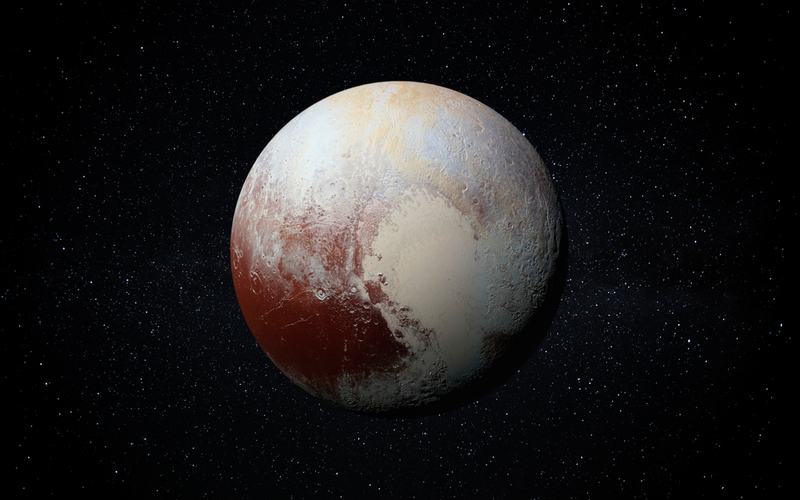
NASA Administrator Jared Isaacman declared his support for reclassifying Pluto as a planet during testimony before the Senate Committee on Appropriations last week.
Isaacman, confirmed as NASA's 15th administrator in December 2025 by the Senate at President Donald Trump's nomination, responded to Sen. Jerry Moran (R-KS), the committee chair, by stating, "Senator, I am very much in the camp of 'make Pluto a planet again.'" He added that NASA is preparing research papers to "escalate through the scientific community to revisit this discussion."
The remarks came amid a review of President Trump's proposed fiscal year 2027 budget request for NASA, which includes substantial cuts to the agency's science programs. Isaacman also received bipartisan praise for the successful Artemis II lunar mission during the hearing.
A billionaire entrepreneur and aviator, Isaacman founded payment processing firm Shift4 Payments and has flown private space missions, including the Polaris Dawn flight with SpaceX. His appointment marked a shift toward private sector involvement in space leadership.
Pluto, discovered in 1930 by Clyde Tombaugh at Lowell Observatory in Arizona, held ninth-planet status for 76 years. The International Astronomical Union (IAU) reclassified it as a dwarf planet in 2006 after discoveries of similar Kuiper Belt objects like Eris raised questions about its orbit-clearing ability, one of the three IAU criteria for planethood.
The decision sparked ongoing debate among astronomers. Proponents of Pluto's planethood, such as Alan Stern, principal investigator for NASA's New Horizons mission that flew by Pluto in 2015, argue for definitions emphasizing geology and atmosphere over orbital dominance. Critics maintain that the IAU definition ensures consistency amid thousands of potential objects.
Isaacman's comments echo earlier statements, including a March 2026 interview where he suggested executive action. Public figures like actor William Shatner have criticized the IAU, with Elon Musk voicing support for reclassification. However, any NASA push or U.S. executive order would not bind the IAU, the global authority on such matters.
NASA's planned papers represent a formal step, though details remain unclear. The agency continues Kuiper Belt studies, but Isaacman's advocacy highlights cultural attachment to Pluto's legacy amid evolving solar system understanding.

Comments
No comments yet. Be the first to share your thoughts.