
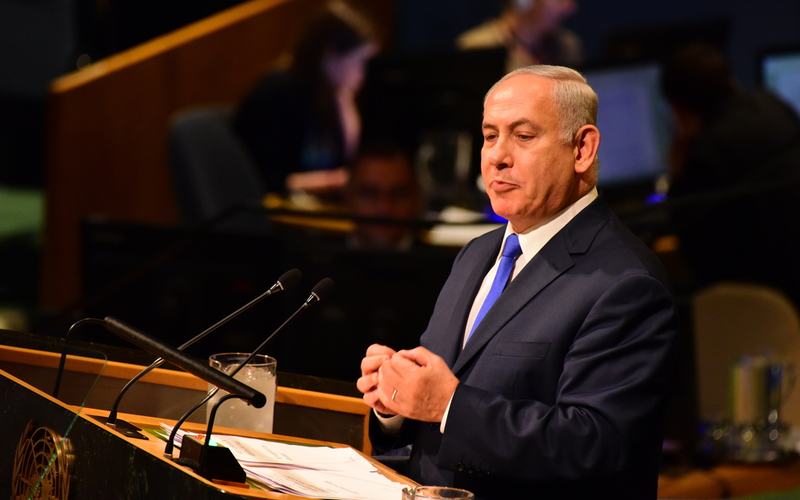
Israeli Prime Minister Benjamin Netanyahu has renewed calls for a national unity government with opposition leader Gadi Eisenkot as coalition negotiations continue following the inconclusive October 27 election.
Netanyahu stated in a video message Saturday that his Thursday meeting with Eisenkot strengthened his view that such a government is essential for Israel's security. He argued it would allow the country to eliminate the Iranian threat and claimed Tehran would not hesitate to use nuclear weapons against Israel.
Eisenkot, who received the mandate from President Isaac Herzog to form a government, dismissed the appeal as political maneuvering. He said Netanyahu knows he lost the election and accused him of sowing division while talks are already underway.
Election results left Netanyahu's right-wing and religious bloc with 53 seats in the 120-seat Knesset and Eisenkot's four-party bloc with 48 seats. Arab-led parties won a record 19 seats. Neither bloc secured a majority.
Eisenkot has until December 6 to form a government, with a possible 14-day extension. His team has ruled out including Arab parties and has explored options including a minority government or partnerships with elements from Netanyahu's bloc.
Negotiating teams from Likud and Yashar met Sunday at the Dan Accadia Hotel in Herzliya. The hour-long session was described as positive, with discussions set to continue later this week. A rotating premiership was not addressed.
Netanyahu has emphasized that any unity government should include only parties that recognize Israel as a Jewish state. He warned against coalitions dependent on Arab parties, citing their positions on issues like Hamas and Palestinian refugees.
Eisenkot has signaled openness to working with some Likud members and Religious Zionism if commitments to unity are genuine. Major differences persist over leadership and policy priorities.

Comments
No comments yet. Be the first to share your thoughts.