
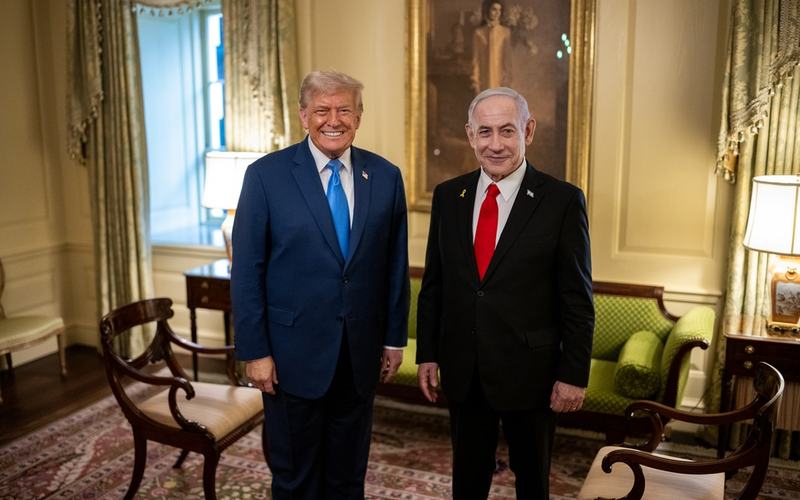
Benjamin Netanyahu's efforts to form Israel's next government faced fresh obstacles on Wednesday after Democrats won majorities in both the U.S. House and Senate in Tuesday's midterm elections.
Rivals including opposition head Gadi Eisenkot pointed to the results as proof that Netanyahu had squandered generations of bipartisan American backing for Israel. The Democratic sweep came one week after Israel's October 27 parliamentary vote, in which Netanyahu's right-wing and religious bloc secured 53 seats in the 120-seat Knesset but fell short of the 61 needed for a majority.
Eisenkot's centrist-led opposition bloc took 48 seats, while Arab parties won a record 19. Israeli President Isaac Herzog began consultations with party leaders on Wednesday to decide whom to task with forming a government. Netanyahu remains caretaker prime minister in the interim.
Democrats' gains were fueled in part by voter frustration over the U.S.-Israeli war on Iran and rising energy costs. On election day, President Donald Trump, who had endorsed Netanyahu, pledged to end $4 billion in annual U.S. military aid to Israel, calling it a way to blunt a Democratic talking point.
Eisenkot said his leadership would restore stronger ties with Washington. Other opposition figures accused Netanyahu of making Israel toxic to both parties in the United States. Netanyahu's Likud party performed strongly among Jewish voters but could not overcome the overall shortfall.
The inconclusive Israeli results and the shift in U.S. congressional control have raised questions about future military aid and joint actions against Iran. Coalition talks in Israel are expected to stretch for weeks, with the possibility of another election if no government forms.

Comments
No comments yet. Be the first to share your thoughts.