
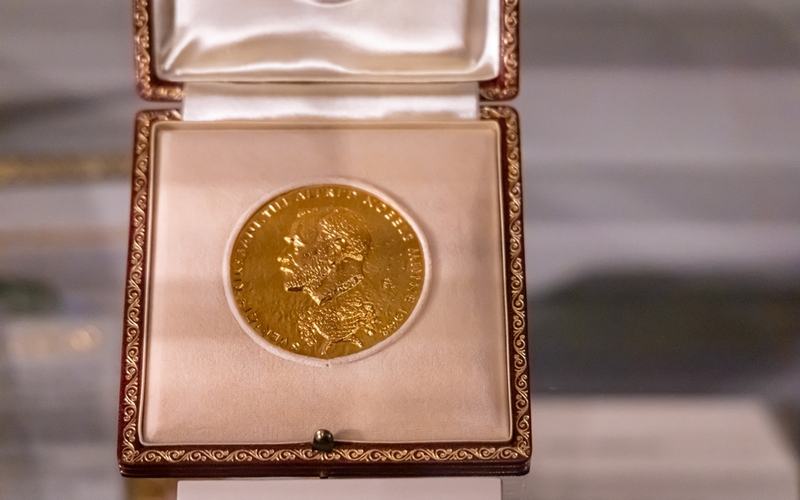
The 2026 Nobel Prize in Physics was awarded to Francis Halzen for his decisive contributions to the IceCube Neutrino Observatory and the discovery of high-energy neutrinos of astrophysical origin.
The Royal Swedish Academy of Sciences announced the honor Tuesday in Stockholm. Halzen, an 82-year-old Belgian-born physicist and professor at the University of Wisconsin-Madison, received the award as a single laureate. The prize totals 12 million Swedish kronor.
Halzen proposed using Antarctic ice to detect neutrinos in 1988. The IceCube observatory, a cubic kilometer of ice equipped with light sensors at the South Pole, became operational in 2011. It captures rare flashes of light produced when neutrinos interact with atomic nuclei, providing data on violent cosmic processes invisible to traditional telescopes.
Neutrinos, often called ghost particles, pass through matter almost undetected. The observatory has identified high-energy neutrinos originating outside the solar system, opening a new window into the universe's most extreme environments.
Halzen, now a U.S. citizen, expressed surprise at the recognition during a phone call from Italy. He credited the international team that made the project a reality despite early skepticism.
The Nobel Committee highlighted his vision and scientific leadership. Chair Mark Pearce noted that Halzen provided a fantastic instrument for a new kind of astronomy.
This marks the second Nobel announced this week. The prize underscores American leadership in pioneering particle physics experiments that advance fundamental understanding of the cosmos.

Comments
No comments yet. Be the first to share your thoughts.