
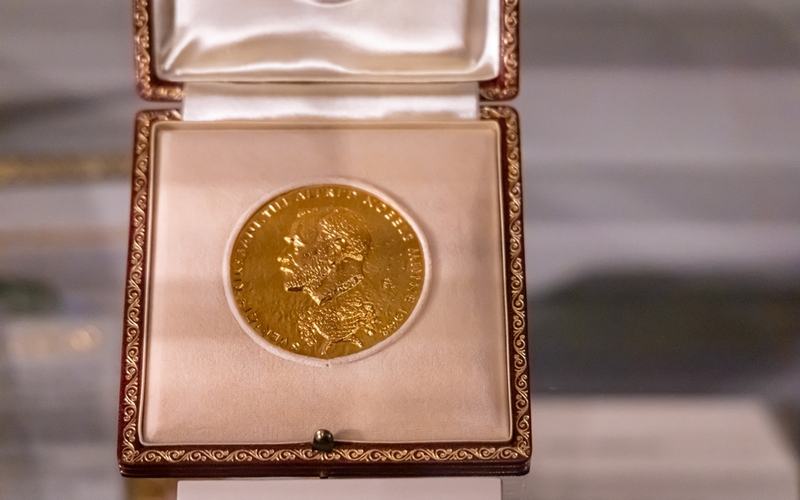
The Nobel Assembly at Karolinska Institutet announced today that the 2026 Nobel Prize in Physiology or Medicine has been awarded jointly to Karl Deisseroth, Peter Hegemann and Georg Nagel for their discoveries concerning light-gated ion channels and optogenetics.
The technique allows researchers to switch individual nerve cells on or off in living brains using light, providing new tools to study how the brain forms memories, feelings and behaviors. It has already transformed neuroscience research worldwide.
Hegemann and Nagel identified channelrhodopsin, a light-sensitive protein from single-celled algae that opens ion channels when exposed to light. Deisseroth then introduced the gene for this protein into mammalian nerve cells, demonstrating that blue light could trigger nerve signals. He later extended the method to living mice.
The prize amount of 12 million Swedish kronor will be shared equally among the three laureates. Deisseroth is affiliated with Stanford University and the Howard Hughes Medical Institute in the United States. Hegemann works at Humboldt University of Berlin, and Nagel at the University of Würzburg, both in Germany.
The announcement opens the 2026 Nobel season, with prizes in physics, chemistry, literature, peace and economic sciences to follow in the coming days. Optogenetics has enabled detailed mapping of neural circuits and holds promise for advancing understanding of brain disorders.

Comments
No comments yet. Be the first to share your thoughts.