
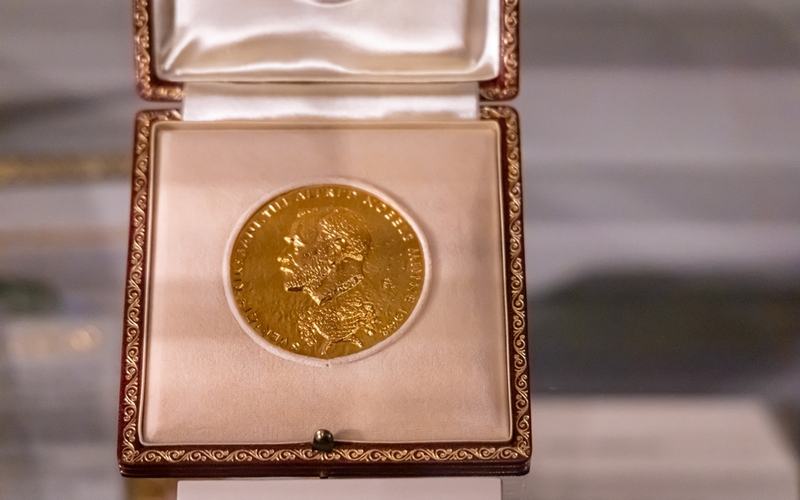
The Nobel Prize in Physics for 2026 was awarded today to Francis Halzen, a professor at the University of Wisconsin-Madison, for his decisive contributions to the IceCube Neutrino Observatory and the discovery of high-energy neutrinos of astrophysical origin.
The Royal Swedish Academy of Sciences announced the award in Stockholm on Tuesday morning. Halzen, born in 1944 in Tienen, Belgium, proposed using Antarctic ice to detect neutrinos in 1988. His vision led to the construction of the observatory, completed in 2011, which consists of thousands of light sensors embedded in a cubic kilometer of ice at the South Pole.
Neutrinos are subatomic particles often called ghost particles because they rarely interact with matter. The IceCube detector captures rare flashes of light produced when high-energy neutrinos collide with ice molecules. These signals have revealed neutrinos originating from violent cosmic events far beyond the solar system.
The Nobel Committee praised Halzen's vision and scientific leadership in enabling this new form of astronomy. Researchers using IceCube have identified high-energy neutrinos from outside the solar system and, more recently, from within the Milky Way galaxy.
Halzen expressed surprise at the recognition during remarks following the announcement. The prize, worth 12 million Swedish kronor, will be presented in Stockholm on December 10.
This marks the latest in a series of Nobel awards recognizing advances in particle physics and astrophysics. Previous neutrino-related prizes include the 1995 award for the discovery of neutrinos and the 2015 award for neutrino oscillations.

Comments
No comments yet. Be the first to share your thoughts.