
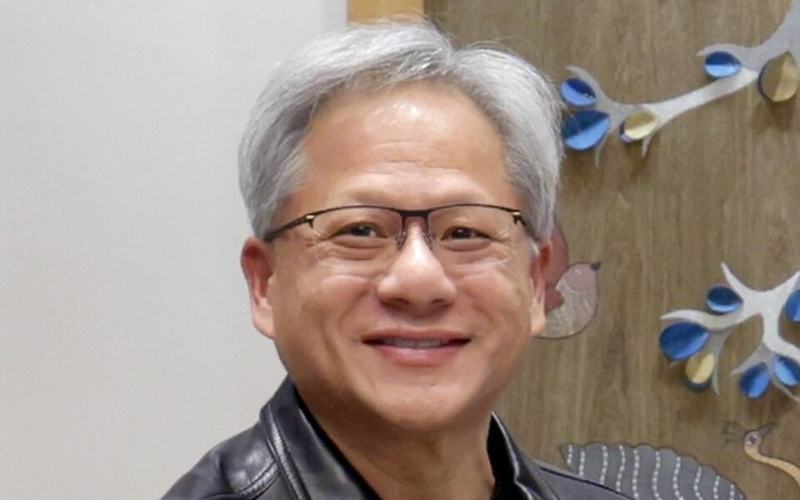
Nvidia CEO Jensen Huang is scheduled to testify before the Senate Banking Committee on Dec. 3 as lawmakers investigate whether the company's advanced semiconductor technology may have reached Chinese interests in violation of U.S. export restrictions.
The hearing was announced Monday by committee Chairman Sen. Tim Scott, R-S.C., shortly after Nvidia's board reinstated Huang as chief executive. The Senate appearance will follow a closed-door House session on Dec. 1, where Huang is expected to answer questions from lawmakers examining his connection to a woman suspected by U.S. authorities of having ties to Chinese intelligence.
Scott said the Senate hearing will examine federal oversight of export controls. Members of both parties have raised concerns about whether Nvidia adequately safeguarded its technology and whether government agencies have effectively prevented restricted chips from reaching foreign adversaries.
Huang resigned Nov. 12 after reports surfaced about extramarital relationships, including one with Alice Huang, a former executive at Singapore-based cloud computing company Megaspeed. U.S. authorities reportedly suspect Alice Huang of having connections to Chinese intelligence, though China has denied she is a spy. Attorney General Todd Blanche has said the Justice Department has not reached a conclusion regarding the allegations.
Megaspeed has also been investigated over claims that advanced American chips were diverted to China despite export restrictions. The company has denied wrongdoing. Reports that it purchased billions of dollars in Nvidia chips and related equipment have prompted questions about whether the technology ultimately reached Chinese companies or military-linked operations.
Republican lawmakers have demanded testimony from Huang and Nvidia's general counsel, Tim Teter. Rep. Brian Mast, R-Fla., chairman of the House Foreign Affairs Committee, joined Rep. John Moolenaar, R-Mich., and Rep. Rick Crawford, R-Ark., in seeking answers about Nvidia's role in the alleged diversion of advanced chips and the possible involvement of a Chinese intelligence asset.
Sen. John Cornyn, R-Texas, challenged Nvidia's assertion that Huang's reinstatement posed no national security risk, while Sen. John Curtis, R-Utah, questioned what information federal officials provided the company's board before it voted to restore him.
President Donald Trump personally supported Huang's return and said he spoke with Nvidia's board to encourage the decision. Trump has maintained that the government has no evidence Huang committed a crime. Nvidia's board said it unanimously approved the reinstatement after receiving assurances from senior U.S. officials that Huang's return would not create a national security threat.
The assurances have not ended congressional demands for further investigation. Sen. Elizabeth Warren, D-Mass., the Banking Committee's ranking Democrat, criticized the decision to reinstate Huang and called for information about Nvidia's export practices and the administration officials who advised the board.
The inquiry also involves Commerce Secretary Howard Lutnick, whose department oversees semiconductor export restrictions. Scott previously requested Lutnick's testimony, and Lutnick has reportedly agreed to appear before the committee, although a date has not been announced.
Lawmakers are also considering bipartisan legislation to strengthen controls on advanced semiconductor exports and improve tracking of chips shipped overseas. Proposals include tighter restrictions on sales to foreign adversaries and requirements for manufacturers to monitor sensitive chips after delivery.
Huang is scheduled to appear before the House Foreign Affairs Committee, House Intelligence Committee and House Select Committee on the Chinese Communist Party on Dec. 1. Teter is expected to testify before the House panels on Dec. 2, before Huang's public Senate hearing the following day.

Comments
No comments yet. Be the first to share your thoughts.