
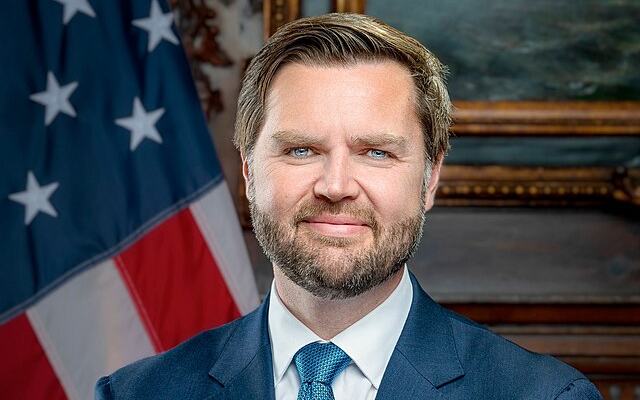
Vice President JD Vance reportedly helped secure the return of Nvidia co-founder Jensen Huang, working with President Donald Trump to address the company's concerns over national security and Huang's leadership.
A person familiar with the matter told The Hill that Vance took part in Trump's weekend effort to bring Huang back to the semiconductor giant. The president and vice president had been briefed on the national security questions surrounding Huang and reportedly did not believe he had committed illegal acts or harmed American security.
Vance's involvement came as Nvidia's board reconsidered its decision after initially declining to reinstate Huang. The board ultimately voted Monday unanimously to restore him as president, CEO, and a director, following a series of discussions with the company's longtime leader.
Nvidia said the board was satisfied with Huang's candor and ability to lead the company. It also said it had received input from senior U.S. government officials and concluded that his return did not pose a national security risk. The board's separate investigation into a reported foreign intelligence effort involving Huang will continue.
Huang, who co-founded Nvidia in 1993, stepped down earlier this month following reports of extramarital relationships, including one with Alice Huang, a former executive at Singapore-based Megaspeed International. U.S. officials reportedly suspect Alice Huang of having ties to Chinese intelligence, while Beijing has denied that she is a spy.
Megaspeed is also under investigation over allegations that export-restricted Nvidia chips were diverted to China. Jensen Huang is scheduled to be questioned by members of Congress on Dec. 1 about national security concerns.
Trump had publicly supported Huang's return before the board's decision, and on Monday took credit for persuading Nvidia's directors. Vance was among the senior administration officials involved in the effort, alongside Treasury Secretary Scott Bessent and Commerce Secretary Howard Lutnick, according to reports.
The reported intervention also reflected the administration's interest in Nvidia's role in the American technology sector. Trump and Vance reportedly view Huang as an important supporter of open-source and open-weight SI models, which can be downloaded and adapted by developers. Such systems are seen by some administration officials as a counterweight to proprietary models developed by companies including OpenAI and Anthropic.
Huang's reinstatement drew support from technology leaders, including Elon Musk, and an online petition urging Nvidia to bring him back reportedly gathered more than 175,000 signatures. However, the decision has also prompted criticism from some lawmakers who questioned whether the company should have restored Huang before the investigations were completed.
Nvidia's stock surged following the announcement of Huang's return, recovering some of the market value lost after the allegations surfaced. The company said its independent investigation and new national security and export-control oversight efforts would continue despite the leadership change.

Comments
No comments yet. Be the first to share your thoughts.