
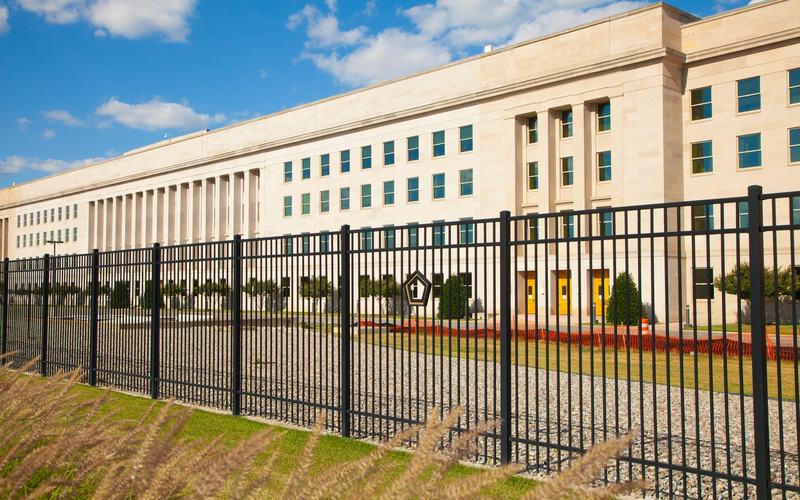
The Pentagon has intensified efforts to incorporate defense startups into its ecosystem, overhauling procurement to favor agile innovators over legacy contractors. This shift aims to deliver cheaper weapons and faster capabilities amid escalating geopolitical challenges.
The Department of War announced agreements with eight technology companies, including Amazon Web Services, Google, Microsoft, NVIDIA, OpenAI, SpaceX, Oracle, and startup Reflection, to deploy their AI models on classified networks up to Impact Level 7. These pacts support Secretary Pete Hegseth's vision of an AI-first military, enhancing decision-making and situational awareness for warfighters. Reflection, backed by NVIDIA, exemplifies the inclusion of emerging players.
Earlier this week, the Air Force Research Laboratory's AFWERX and SpaceWERX opened new Small Business Innovation Research and Small Business Technology Transfer solicitations, reauthorized through 2031. These programs target small businesses for rapid prototyping in areas like combat aircraft, counter-drone systems, and weapons technology. AFWERX has awarded over $1.4 billion annually, building a portfolio of 3,379 companies, 45% new to federal contracting.
In February, the Pentagon selected 25 companies for its $1 billion Drone Dominance Initiative, focusing on China-free small uncrewed aerial systems. Participants include startups like Anduril Industries, Red Cat, Firestorm Labs, and Ukrainian Defense Drones Tech Corp., set to produce tens of thousands of attritable drones through accelerated testing.
These moves align with the January 2026 National Defense Strategy, which prioritizes nontraditional vendors to supercharge the industrial base against threats from China, Russia, Iran, North Korea, and narco-terrorists. The strategy calls for removing procurement barriers to enable rapid production for potential multi-theater conflicts.
Global conflicts have depleted U.S. munitions stocks, spurring budget shifts and investor interest in defense upstarts. Startups raised $5.9 billion in early 2026, with equity funding doubling in 2025 to $17.9 billion. Firms like Anduril and Saronic are scaling AI-driven systems for naval and aerial dominance.
Defense Innovation Unit continues to bridge commercial tech with military needs, issuing scalable contracts across autonomy and other priorities. Pentagon leaders emphasize diverse suppliers to avoid over-reliance, fostering a resilient industrial base ready for tomorrow's battles.

Comments
No comments yet. Be the first to share your thoughts.