
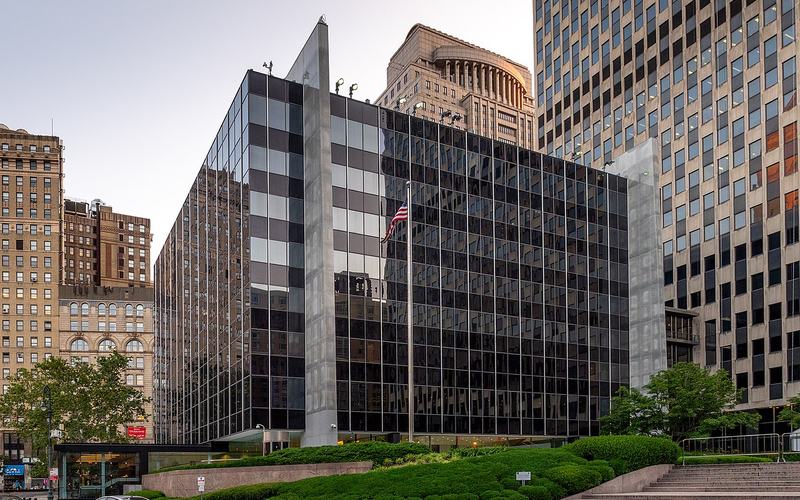
The U.S. Court of International Trade ruled Thursday that President Donald Trump's 10% global tariffs exceed his authority under Section 122 of the Trade Act of 1974, blocking the duties for two small businesses and the state of Washington.
In a 2-1 decision, the three-judge panel found the tariffs were not justified to address a serious balance-of-payments deficit or imminent dollar depreciation, as required by the statute. The court cited the administration's reliance on a $1.2 trillion annual U.S. goods trade deficit and a current account deficit of 4% of GDP, deeming these insufficient for the measure.
The ruling applies narrowly to plaintiffs Basic Fun!, a toy company, Burlap & Barrel, a spice importer, and Washington state, which demonstrated tariff payments through its university system. A broader injunction sought by 24 mostly Democratic-led states was denied for lack of standing, leaving the tariffs in place for other importers pending a possible government appeal.
Jay Foreman, CEO of Basic Fun!, hailed the decision as "an important win for American companies that rely on global manufacturing." He added that it provides "needed clarity and stability for companies navigating global supply chains."
The tariffs took effect on February 24, shortly after the Supreme Court struck down Trump's prior sweeping global levies. In a 6-3 decision on February 20 in Learning Resources, Inc. v. Trump, Chief Justice John Roberts wrote that the International Emergency Economic Powers Act (IEEPA) does not authorize tariffs, applying the major questions doctrine to limit executive power over Congress's taxing authority.
Justices Neil Gorsuch and Amy Coney Barrett joined key parts of the majority opinion alongside the three liberal justices, while Justices Clarence Thomas, Samuel Alito, and Brett Kavanaugh dissented. The earlier tariffs included 10% "reciprocal" duties on nearly all imports and higher rates on countries like China, Canada, and Mexico, justified as responses to trade deficits and fentanyl trafficking.
Trump invoked Section 122 for the new tariffs, allowing temporary duties up to 150 days. Challengers argued this was an end-run around the Supreme Court ruling. The administration has collected duties since February, though exact figures for this round remain undisclosed.
Economists note that no balance-of-payments crisis exists to warrant the tariffs, making them vulnerable. The decision underscores ongoing legal scrutiny of Trump's trade agenda, which emphasizes protectionism to address deficits but faces repeated checks from courts affirming congressional control over tariffs.
The White House has not commented on the ruling as of Thursday evening. An appeal to the U.S. Court of Appeals for the Federal Circuit could follow, potentially extending the legal battle.

Comments
No comments yet. Be the first to share your thoughts.