
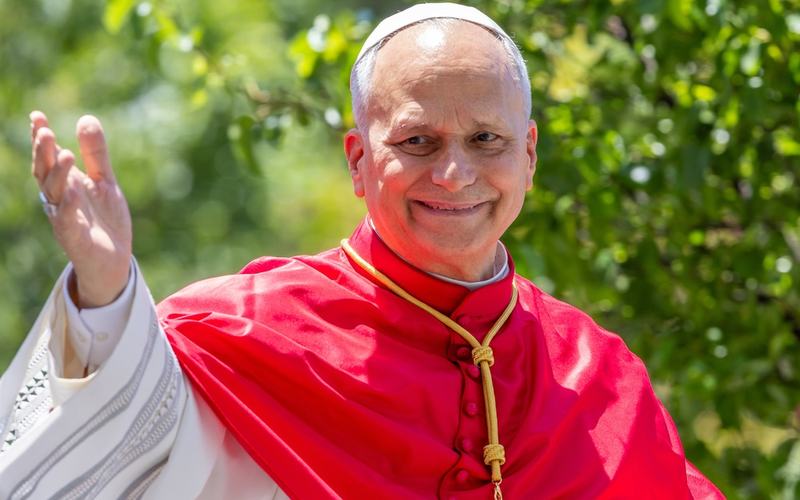
Pope Leo XIV visited the high-altitude Peruvian city of Cusco on Sunday, November 15, facing a demanding physical challenge during the final full day of his South American tour. The 71-year-old pontiff arrived in the ancient Inca capital, located more than 3,400 meters (11,000 feet) above sea level, about a month after undergoing surgery to remove part of a lung.
The pope’s arrival drew large crowds, with children dressed in brightly woven ponchos and embroidered skirts greeting him as he stepped off the plane. Hundreds of thousands of people lined the streets to welcome Leo, who spent nearly two decades as a missionary in Peru before becoming head of the Catholic Church. The country has played a central role in his life, and the visit has included emotional reunions in Chiclayo, where he previously served as bishop.
Leo traveled to Saqsaywaman, an expansive stone fortress overlooking Cusco, where musicians and traditional dancers from across the Andes gathered for a prayer service. Speaking at the site, the pope praised its historical and spiritual significance, describing the fortress as a place where ancient people sought the divine. Despite light rain, crowds cheered as he addressed those gathered.
The visit also highlighted the blending of Catholicism with traditional Andean beliefs. Some residents described their faith as a combination of Catholic Christianity and customs passed down through generations. Engineer Adriano Fuyo Mora said he identified as Catholic and Christian while also drawing on the traditions of his parents and ancestors.
The pope’s health had raised questions about whether he would be able to complete the trip after his recent surgery. However, Leo maintained the demanding 12-day itinerary through Uruguay, Argentina and Peru. He thanked Peruvians for their prayers and support, specifically acknowledging their concern for his health.
Later Sunday, Leo was scheduled to travel to Pucallpa, one of the largest cities in the Peruvian Amazon, where he planned to meet Indigenous leaders and hear concerns about threats to rainforest communities. The region, located along the Ucayali River, is among Peru’s major deforestation hotspots. Government figures show the country lost approximately 3.2 million hectares of forest between 2001 and 2024, an area roughly the size of Belgium.
Indigenous leader Fernando Carteiro said communities hoped the pope would use his position to bring international attention to the challenges facing people in the Amazon. Leo was expected to hear concerns involving drug trafficking, illegal logging and pollution, issues that have placed growing pressure on rainforest communities.
His scheduled visit also included a traditional Shipibo-Konibo dance and a ceremony involving a shihuahuaco tree, an Amazon species valued by loggers that can live for more than 1,000 years. The pope was then expected to celebrate Mass before returning to Lima.
Throughout his South American tour, Leo has emphasized the needs of poor and marginalized communities, spoken against violence, and raised concerns about declining birth rates. His visit to Peru has also carried personal significance, as he has repeatedly referred to the country as his adopted homeland.

Comments
No comments yet. Be the first to share your thoughts.