
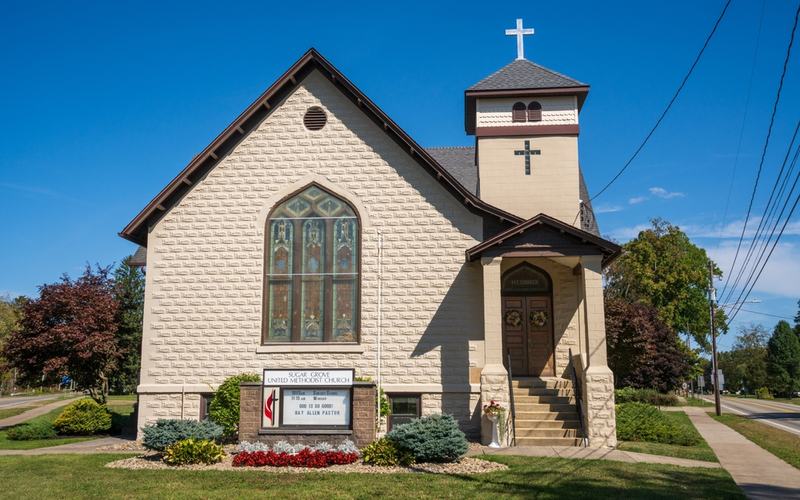
White evangelical Christians, a key constituency in President Donald Trump’s 2024 victory, participated at significantly lower levels in the 2026 midterm elections, according to a new analysis from the American Communities Project. The findings point to weaker Republican turnout and narrower GOP margins in communities that have traditionally provided strong support for the party.
The Nov. 12 analysis examined 343 counties classified as evangelical hubs across 15 states that held U.S. Senate elections. Those counties produced just 66% of their 2024 presidential vote totals in the midterms. By comparison, other counties in the same states produced 78% of their 2024 vote totals, a 12-percentage-point difference. Researchers estimated that evangelical hub counties would have generated approximately 333,000 additional votes if their turnout had matched the rest of those states.
Republican margins also declined substantially in the counties. Trump carried the evangelical hubs by 62 percentage points in 2024, while Republican Senate candidates won them by 45 points in 2026, representing a 17-point shift toward Democrats. The researchers said the turnout decline and reduced Republican margins may have contributed to the party’s Senate losses, including Sen. Cindy Hyde-Smith’s defeat in Mississippi and larger-than-expected Democratic victories in Texas, Georgia and North Carolina. The county analysis, however, measures voting patterns in communities with large evangelical populations rather than the individual turnout of every white evangelical voter.
National polling offered additional indications of changes in the voting bloc. Preliminary voter surveys reported by Axios estimated that white evangelical or born-again Christians accounted for 17% of the electorate in 2026, down from 23% in 2024. Their support for Republican House candidates also slipped, from 84% to 82%. A separate NORC survey placed their share of the electorate at 20%, closer to levels recorded in recent midterm elections.
Pew Research Center polling found that Trump’s approval among white evangelical Protestants declined from 78% shortly after his second inauguration to 58% in a survey conducted Sept. 28 through Oct. 4. Although white evangelicals remained more supportive of Trump than several other religious groups, the decline marked a 20-percentage-point drop. Pew’s January 2026 survey also found that 40% of white evangelical Protestants were extremely or very confident that Trump acted ethically in office, compared with 55% a year earlier. The share who supported all or most of his plans and policies fell from 66% to 58%.
Other polling suggested that dissatisfaction had spread beyond presidential approval. The Public Religion Research Institute’s 2026 American Values Survey found that 44% of white evangelical Protestants said their opinion of Trump had worsened over the previous two years. Interviews conducted by The Washington Post also featured evangelical voters who expressed frustration with the president’s conduct and policies while remaining reluctant to support Democratic candidates.
Abortion policy may be another point of tension between Trump and some religious conservatives. Although Trump appointed Supreme Court justices who helped overturn Roe v. Wade, he has generally emphasized leaving abortion policy to the states rather than pursuing a nationwide ban. Some anti-abortion activists have criticized that approach, as well as the administration’s positions on abortion medication and other reproductive policies. Pew’s January survey found that 74% of white evangelical Protestants believed abortion should be illegal in all or most circumstances.
Economic concerns, the administration’s handling of the Iran war and questions about presidential ethics may also have contributed to declining enthusiasm. The election findings do not establish a single cause for the turnout decline, but they show that Republican candidates received smaller margins in evangelical strongholds than they did during the 2024 presidential election.
The results raise questions about whether Republicans can continue to count on the same level of participation and support from religious conservatives in future elections. White evangelicals remain an important part of the GOP coalition, but the 2026 midterms showed a measurable decline in turnout and Republican margins across counties where the voting bloc is particularly prominent.

Comments
No comments yet. Be the first to share your thoughts.