
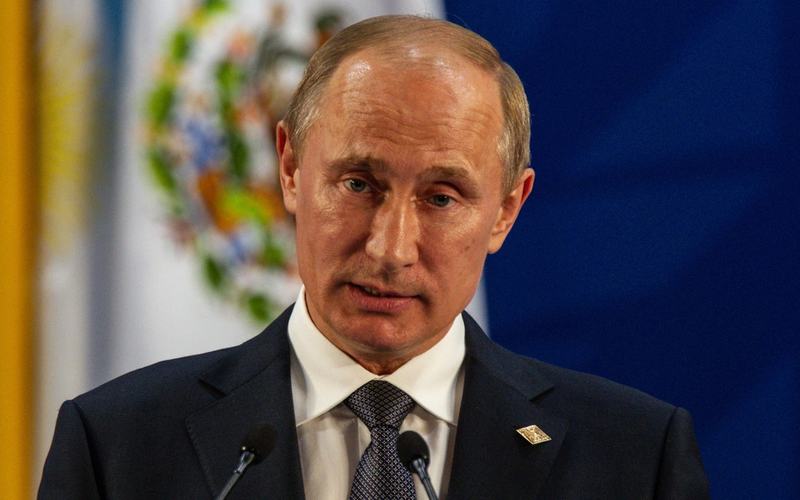
Russian President Vladimir Putin stated that Europe could face natural gas prices as high as $1,500 per 1,000 cubic meters this winter after current levels reached around $1,000.
Putin made the remarks Friday while in New Delhi for the BRICS summit. He reminded European officials that Russia previously supplied gas under long-term contracts for $150 to $180 per 1,000 cubic meters.
European leaders rejected those fixed prices and pushed for exchange-based market pricing instead, Putin said. "We told them: ‘Gas is not a market commodity. At least, not a classic market commodity. It won’t work. Your prices will only rise.’ Well, you got what you asked for. A thousand dollars or euros now. And maybe even more," he stated.
Traders focused on short-term profits rather than physical reserves have driven the surge, according to Putin. He warned that this approach leaves Europe vulnerable to further spikes as winter approaches and storage levels come under pressure.
European benchmark gas prices have already climbed above 80 euros per megawatt-hour this month, marking the highest levels in more than three years. The increases follow years of reduced Russian pipeline deliveries amid the ongoing conflict in Ukraine and Europe's shift toward alternative suppliers and renewable sources.
Putin framed the outcome as the direct result of Europe's policy choices. He noted that the continent's move away from reliable Russian supplies has produced higher costs and greater market volatility.
The comments come as European governments prepare for the heating season with limited storage buffers compared to previous years. Analysts have pointed to the combination of geopolitical tensions, infrastructure issues, and the abandonment of long-term contracts as key drivers behind the price trajectory.
Putin also addressed related topics during the same press interaction, including warnings that European troop deployments to Ukraine would constitute direct conflict with Russia. He attributed broader European political and economic strains to what he described as systemic errors by Western globalist policies.

Comments
No comments yet. Be the first to share your thoughts.