
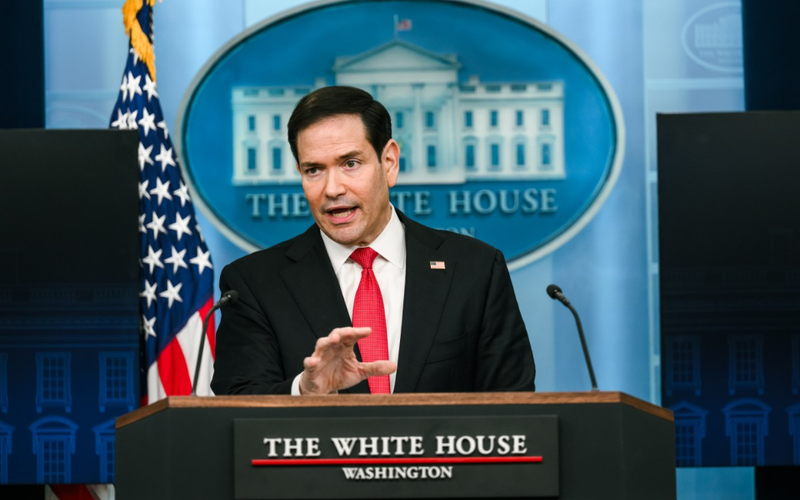
Secretary of State Marco Rubio could emerge as a serious contender for the 2028 Republican presidential nomination if President Donald Trump encourages him to enter the race, according to people close to the Florida Republican. The possibility is gaining attention as Trump continues praising Rubio and questions grow about Vice President JD Vance's position as the potential successor to the president.
Some of Rubio's allies say he would run if Trump asked him to do so, according to reporting by The New York Times. Trump has not formally endorsed either Rubio or Vance, but his recent comments have highlighted the secretary of state's standing within the administration.
"How hot is Marco, right?" Trump said Tuesday during the ASEAN summit in Manila. "Is Marco doing a great job? He's been fantastic."
Trump's favorable comments come as Republicans reassess their leadership options following the party's losses in the November midterm elections, which handed Democrats control of both chambers of Congress. The results have intensified discussion about who should lead the Republican Party after Trump's presidency, with some lawmakers and donors questioning whether Vance should be considered the automatic choice for the 2028 nomination.
The president's relationship with Rubio has become an increasingly important part of that discussion. Rubio has remained a prominent member of Trump's national security team and has consistently defended the administration's decision to launch military action against Iran. His position has earned him praise from Trump, particularly as Vance has faced questions about his own comments regarding the war and the reasons behind the Republican election losses.
Trump reportedly became frustrated with Vance's post-election assessment, in which the vice president pointed to the Iran conflict and economic concerns as contributing factors in the GOP's defeat. Trump believed Vance should have more explicitly reaffirmed that the decision to attack Iran was correct. Rubio, meanwhile, has continued defending the president's actions and publicly credited Trump for authorizing the strikes.
In a recent interview with The Times, Rubio said Trump "deserves a tremendous amount of credit" for ordering the strikes against Iran. He argued that leadership sometimes requires making decisions that may be politically unpopular but are necessary for the country's long-term interests.
The contrast has fueled speculation that Trump could eventually favor Rubio over Vance as the Republican standard-bearer. However, Rubio has repeatedly avoided discussing his own presidential ambitions and previously indicated that he would support Vance if the vice president sought the nomination.
Rubio also recently dismissed reports that he was preparing to leave the administration to pursue a campaign. He has said serving Trump through the end of the president's term has always been his plan and has repeatedly told reporters he does not intend to discuss the 2028 election.
The secretary of state's reluctance to address the speculation has not stopped allies and other Republicans from considering the possibility. Some GOP lawmakers have already expressed interest in a Rubio campaign, while others continue to support Vance or are keeping their options open. Florida Gov. Ron DeSantis and Sen. Ted Cruz of Texas have also been mentioned as potential Republican contenders.
For now, neither Rubio nor Vance has formally announced a presidential campaign, and Trump has not made a final decision about whom he would support. But the growing discussion surrounding Rubio illustrates how the Republican succession debate is developing earlier than expected, particularly as party leaders attempt to determine what direction the GOP should take after the midterm setback.

Comments
No comments yet. Be the first to share your thoughts.