
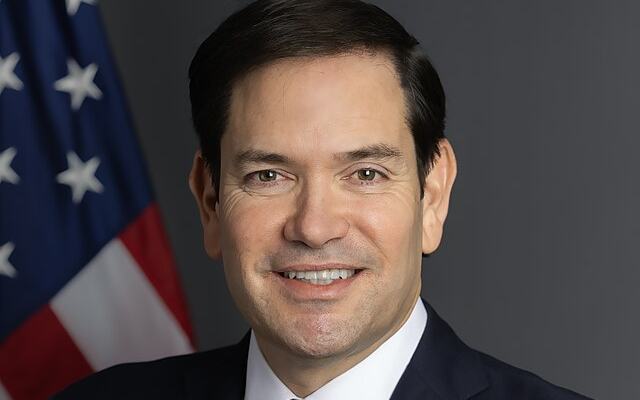
Secretary of State Marco Rubio said the United States is closely watching developments in Russia after Darya Shipilova, a 28-year-old laboratory worker at the Irkutsk Anti-Plague Research Institute, died after being hospitalized with severe pneumonia.
“We're watching and monitoring it closely. I don't think it's cause for alarm, but it is cause for focus,” Rubio said Monday.
.@SecRubio on the possible Russia plague outbreak: "We're watching and monitoring it closely. I don't think it's cause for alarm, but it is cause for focus." pic.twitter.com/00tMSxGj4V
— Real America's Voice (RAV) (@RealAmVoice) October 5, 2026
Shipilova was hospitalized Sept. 29 and died Oct. 2. Russian health authorities have officially described her condition as pneumonia of unknown origin and have not confirmed that she had pneumonic plague. Testing by Russia's public-health watchdog, Rospotrebnadzor, reportedly found no microorganisms connected to her professional activities.
The case has nevertheless generated international concern because Shipilova worked at a facility specifically involved in plague research. Reports from independent Russian media have alleged that she accidentally broke a test tube containing pneumonic-plague bacteria on Sept. 25 before developing severe pneumonia several days later. Russian authorities have not publicly confirmed that a laboratory accident occurred.
Russian authorities have responded with significant precautions despite denying that a plague outbreak has been confirmed. People who had contact with Shipilova have been placed under medical observation, and a hospital in Shelekhov where she was treated, was quarantined. Russia's health watchdog has also sent its head, Anna Popova, to the Irkutsk region to oversee the response.
The possibility of pneumonic plague is particularly concerning because the disease affects the lungs and can spread between people through respiratory droplets. Untreated pneumonic plague can become fatal rapidly, although modern antibiotics can be effective when treatment begins early.
The Trump administration has been monitoring the situation as questions remain about what caused Shipilova's illness and whether anyone else was exposed. Rubio said the potential for a dangerous infection to spread is the reason the United States is paying close attention, even though officials do not currently believe the situation warrants public alarm.
The developments have also renewed comparisons to the debate surrounding the origins of COVID-19 and the Wuhan Institute of Virology in China. A 2025 House Select Subcommittee on the Coronavirus Pandemic report concluded that the evidence increasingly supported a laboratory- or research-related accident as the likely origin of SARS-CoV-2, although other U.S. intelligence assessments have said there was no direct evidence proving that COVID-19 originated inside the Wuhan laboratory.
That history makes the circumstances surrounding the Russian case especially sensitive. Another laboratory worker at an institution handling dangerous pathogens has now died following a serious respiratory illness, while reports have raised questions about a possible laboratory exposure.
However, there is an important distinction between the two cases. There is currently no confirmed evidence that Shipilova's death was caused by plague, that a laboratory accident occurred or that the disease has spread beyond her. Russian officials have specifically rejected claims that testing connected her illness to pathogens handled at the institute.
For now, U.S. officials are watching the situation while Russian authorities investigate the cause of Shipilova's death and monitor those who may have been exposed. Rubio's comments underscore that Washington considers the incident serious enough to warrant close attention, even as officials stop short of describing it as an active international outbreak.

Comments
No comments yet. Be the first to share your thoughts.