
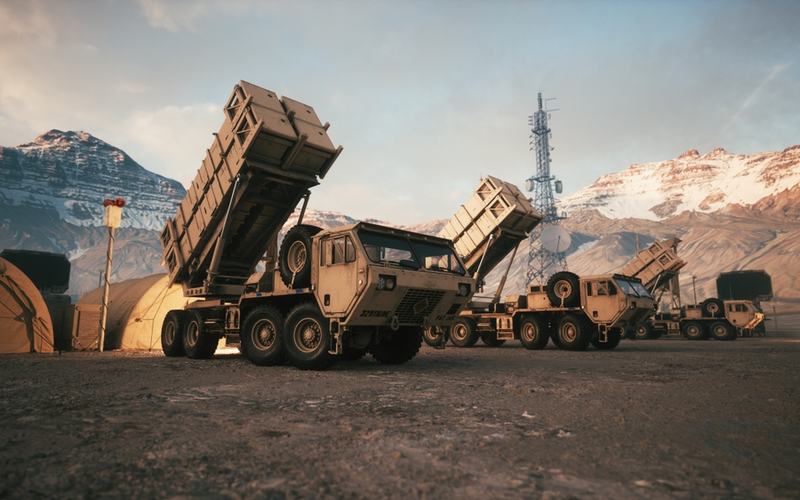
A Russian Kh-101 missile landed in southeastern Poland on Friday, raising concerns about the expanding security risks of Moscow’s war against Ukraine. Polish Prime Minister Donald Tusk said the incident appeared to be an intentional provocation, while NATO officials condemned the missile’s entry into Polish airspace.
The missile came down approximately 37 miles from the Ukrainian border as Russia carried out a large overnight assault on neighboring Ukraine. The crash site was also about 47 miles from an area where thousands of European troops were participating in military exercises designed to prepare for a possible mission in Ukraine after a peace agreement.
Polish authorities reported no immediate injuries or property damage. Surveillance footage and cellphone recordings collected by Poland’s PAP news agency showed a bright flash and a large explosion in a wooded area. Police established roadblocks while military helicopters and emergency vehicles operated near the site as investigators examined the incident.
Tusk said the circumstances suggested Moscow was deliberately testing European security. NATO Secretary-General Mark Rutte described the missile’s landing as a "grave violation" of Polish airspace, adding that the incident was a consequence of Russia’s continued war against Ukraine. Rutte was expected to visit Poland over the weekend.
The military exercises taking place in southeastern Poland reflect European preparations for a potential postwar security arrangement in Ukraine. Thousands of troops are participating in training for a possible stabilization mission intended to help secure the country and rebuild its military after the fighting ends. Russian President Vladimir Putin has warned that Moscow would consider European troops deployed to Ukraine legitimate targets, even if they arrived following a peace agreement.
The incident came as President Donald Trump and his envoys continued efforts to negotiate an end to the nearly five-year war. Trump discussed the conflict with Putin and Chinese leader Xi Jinping during a summit in China on Thursday, according to U.S. envoy Steve Witkoff. Another envoy, Jared Kushner, told European leaders that Washington believes Russia may be willing to accept NATO-like security guarantees for Ukraine as part of a potential agreement.
Despite the diplomatic discussions, Russian forces launched an extensive overnight barrage against Ukrainian targets. Ukrainian President Volodymyr Zelenskyy said Russia fired more than 400 drones and over 110 missiles, including 27 ballistic missiles, killing at least eight civilians and wounding more than two dozen.
Six of the reported deaths occurred in Kyiv. Ukrainian officials said apartment buildings, medical facilities, warehouses and bridges were struck. Russia's Defense Ministry said its forces targeted facilities connected to Ukraine's military, including missile and drone assembly sites and a plant producing rocket-fuel components.
The bombardment followed Ukrainian strikes earlier in the week against the Kerch Bridge, which connects occupied Crimea with mainland Russia and serves as an important supply route for Moscow's military operations. Putin had vowed retaliation for the attacks, and the latest barrage appeared consistent with Russia's previous responses to major Ukrainian strikes.
Russian attacks also hit Ukraine's energy infrastructure as the country prepares for winter. Deputy Energy Minister Artem Nekrasov said strikes against power plants, substations and transmission networks forced the country's three operational nuclear power plants to reduce electricity generation. Emergency power outages were reported across 11 regions.
Ukrainian Foreign Minister Andrii Sybiha said the missile incident in Poland demonstrated that Russian aggression posed a threat beyond Ukraine's borders. He argued that Moscow's attacks undermined European security even as Russian officials discussed a possible new security arrangement for the continent.
There was no immediate response from Moscow to the missile incident or the accusations from Polish officials. Meanwhile, Russia's Deputy Foreign Minister Sergei Ryabkov said an invitation for representatives from France, Germany and the United Kingdom to visit Moscow did not mean Russia had agreed to include those countries in the U.S.-brokered peace negotiations. Putin said Thursday that Moscow had invited European representatives to hear their proposals about a possible role in future discussions.
Although diplomatic efforts are continuing, Russia and Ukraine remain far apart on the terms of a potential settlement, and no date has been announced for the next round of U.S.-led negotiations.

Comments
No comments yet. Be the first to share your thoughts.