
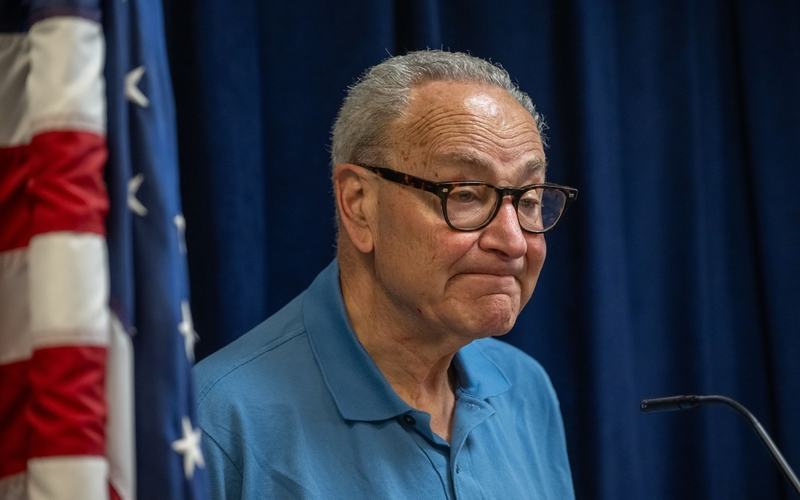
Senate Minority Leader Chuck Schumer, D-N.Y., is facing growing resistance from members of his own party as he seeks to become majority leader when Democrats take control of the chamber in January. Although Democrats secured at least 54 Senate seats in the midterm elections, several incumbent and incoming senators are questioning whether Schumer is the right person to lead the new majority.
Sen. Elissa Slotkin, D-Mich., said Saturday that she would not support Schumer without a detailed agenda outlining what Democrats intend to accomplish during the first 100 days of the new Congress. Slotkin, who has been mentioned as a possible 2028 presidential candidate, also declined to rule out challenging Schumer for the leadership position.
"Not until I see a plan, no. And I would certainly not vote for him if we don't have a plan," Slotkin told Politico. When asked whether she might pursue the leadership position herself, she responded, "I'm not ruling anything out."
Sen. Chris Van Hollen, D-Md., also urged Democrats not to automatically support Schumer's return to leadership, arguing that members should have a meaningful choice. "There should be no coronation of the next Democratic leader," Van Hollen told CNN.
The opposition also includes newly elected Democrats. Kansas Sen.-elect Adam Hamilton said Sunday that Schumer is viewed as a divisive figure in his state, where Republicans repeatedly portrayed the New York Democrat as too liberal during the campaign. Hamilton said he wants a leader who can govern from the center and bring together Democrats, Republicans and competing factions within his own party.
Other incoming Democrats expressing opposition or reservations include Michigan's Abdul El-Sayed, Maine's Troy Jackson, Minnesota's Peggy Flanagan and South Carolina's Annie Andrews. Their concerns reflect divisions between progressives seeking a more aggressive party agenda and moderates who favor bipartisan cooperation. Progressive organization Indivisible has also called for Schumer to be replaced, warning Democrats against returning to what it described as "business as usual."
Despite the criticism, Schumer remains the leading contender for the position. He needs the support of a majority of Democratic senators in a secret-ballot leadership election scheduled for early December. Several prominent Democrats, including Sens. Mark Kelly, D-Ariz., and Kirsten Gillibrand, D-N.Y., have already pledged their support.
Kelly said he intends to back Schumer, pointing to the minority leader's work during the election cycle. Schumer has also dismissed questions about his standing, declaring, "I'll be reelected as majority leader."
The growing opposition indicates that Democrats' midterm victories have not resolved disagreements over the party's leadership, political direction, or legislative priorities ahead of the new Congress.

Comments
No comments yet. Be the first to share your thoughts.