
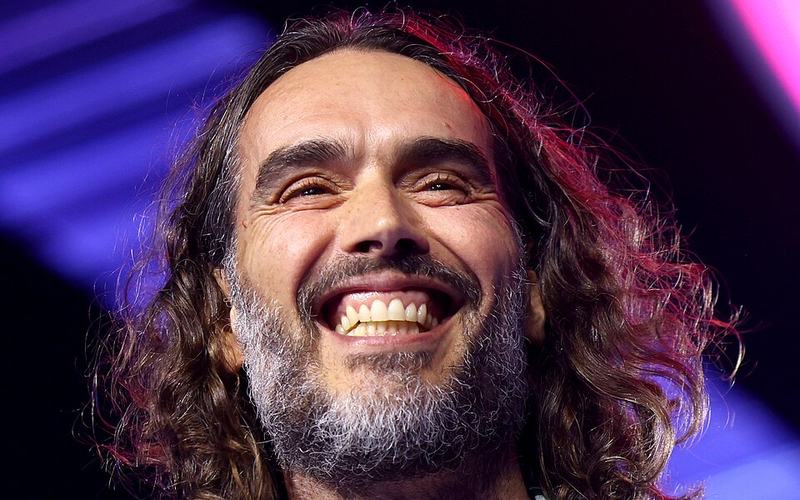
British comedian and actor Russell Brand was sentenced Monday to 10 years and six months in prison after a jury found him guilty of raping one woman and sexually assaulting three others in incidents dating back to 2004 and 2009. The sentence was handed down at Southwark Crown Court in London following a trial that examined allegations from six women and the abuse of influence Brand allegedly exercised during the height of his entertainment career.
Judge Joel Bennathan told the 51-year-old entertainer that his conduct demonstrated a "casual and arrogant disregard" for women who refused his advances. The judge noted that Brand was becoming a prominent celebrity approximately two decades ago, with a public image built around provocative comedy, sexual boasts and outrageous behavior on television and radio. Bennathan said Brand's fame and charisma did not excuse his actions, describing him as a sexual predator.
Brand showed little emotion as the sentence was announced. Before being led away by court officers, he turned toward his wife, Laura, and mouthed the words, "We'll be OK." He had been free while the trial was underway but was taken into custody following the jury's verdict on Thursday.
The jury, consisting of eight men and four women, convicted Brand of four offenses involving four separate women. The convictions included one count of rape and three counts of sexual assault. He was acquitted of two additional rape charges and one count of attempted indecent assault. The allegations involved incidents in London and other locations between 2004 and 2009.
Prosecutors argued that Brand used the influence and access provided by his celebrity status to target women and believed he could act without facing consequences. Prosecutor Riel Karmy-Jones told the court that his fame helped facilitate access to women and contributed to his belief that he could commit offenses with impunity.
The women who came forward described lasting emotional and psychological consequences from the assaults. One victim, who was sexually assaulted during a birthday party at a London bar in 2004, said the experience left her shocked and made her feel like "damaged goods." She also described the difficulty of watching Brand become increasingly famous while his behavior toward women was celebrated as part of his public persona.
Another woman, whom Brand was convicted of raping at his home in 2009 after meeting him backstage at one of his comedy performances, described years of anxiety, humiliation and difficulties with eating and sleeping. She said she initially feared reporting the assault because of Brand's wealth, fame and influence, which made her believe she would not be taken seriously.
A third woman described being kissed and groped by Brand at a London radio station in 2004 or 2005. She said the incident continued to affect her years later, explaining that hearing his voice or seeing his image on television and social media could trigger distress. The fourth conviction involved a woman who said Brand demanded a massage and pressed his face into her groin during the recording of an advertisement in 2009. She told the court that she initially reported the incident to management but felt it was dismissed by senior executives.
Brand's defense attorney, Ian Winter, asked the judge to consider his client's previous charitable work, efforts to help people struggling with drug and alcohol abuse, and limited criminal record. Winter noted that Brand's only previous conviction was for marijuana possession in 1995. He also attempted to characterize the rape allegation as an encounter in which Brand had gone too far after consensual sexual activity, an argument that did not prevent the jury from finding him guilty.
Brand had consistently denied the allegations and maintained that his sexual encounters were consensual. His legal troubles intensified after a 2023 investigation by The Times and Channel 4 brought forward accounts from women who alleged that he had sexually abused and degraded them. The reporting prompted renewed scrutiny of his conduct and contributed to a police investigation that eventually resulted in criminal charges.
Brand became widely known in the early 2000s through stand-up comedy, television appearances and a BBC radio program. His provocative personality and frequent public discussions of sex, drugs and alcohol helped establish him as a recognizable figure in British entertainment. He later appeared in Hollywood films including Forgetting Sarah Marshall and Get Him to the Greek and was briefly married to pop singer Katy Perry.
In more recent years, Brand moved away from mainstream entertainment and relocated to Florida, where he developed a substantial online following through videos discussing wellness, political and cultural controversies, conspiracy theories and his Christian faith. His religious conversion also attracted a group of supporters outside the courthouse during the sentencing hearing, some of whom displayed a banner expressing solidarity with him and comparing his situation to the crucifixion of Jesus Christ.
The sentence marks a significant legal consequence for a former entertainment celebrity whose public career was built around an increasingly controversial persona. With four convictions involving multiple women, Brand now faces more than a decade in prison after a jury rejected his defense against the allegations.

Comments
No comments yet. Be the first to share your thoughts.