
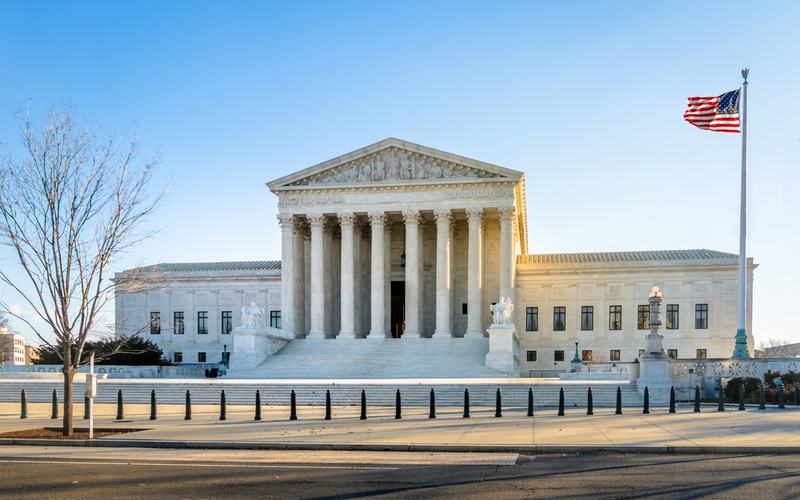
The Supreme Court appeared split Tuesday during oral arguments in a case testing the limits of federal agencies' authority to levy civil fines without going through Article III courts.
In Department of Labor v. Sun Valley Orchards, the justices considered whether the Labor Department can enforce penalties against employers for violating conditions of the H-2A temporary agricultural worker visa program through in-house adjudication. The case stems from a Third Circuit ruling that followed the Court's 2024 decision in SEC v. Jarkesy, which required certain agency enforcement actions seeking civil penalties to proceed in federal court with jury trials.
Deputy Solicitor General Sarah Harris, representing the Labor Department under the Trump administration, warned that a broad ruling against agency proceedings would upend enforcement across numerous programs, including Medicare, Medicaid, and federal student loans. Harris described forcing all such cases into federal courts as the "nuclear option."
Chief Justice John Roberts questioned the scope of executive authority, telling Harris that the government appeared to be stretching broad powers beyond their justification. Justice Brett Kavanaugh expressed concern that the proposal lacked clarity and would create systemic problems going forward.
Justice Neil Gorsuch pressed on why agencies should establish parallel adjudication systems when federal courts already exist. Conservative justices largely signaled skepticism toward expansive agency fining powers in the first part of the argument.
Liberal justices raised practical concerns. Justice Sonia Sotomayor inquired about the disruption to federal courts if they assumed all enforcement duties. Justice Ketanji Brown Jackson noted that Congress intended agencies to handle these matters to prevent undercutting of domestic workers by migrant labor.
The case involves Sun Valley Orchards, a New Jersey farm accused of H-2A violations. An appeals court held that civil penalties must originate in federal court under Jarkesy precedent.
A decision against the government could further constrain the administrative state's enforcement tools, building on recent rulings that have reined in agency power. The outcome remains uncertain given the divided arguments.

Comments
No comments yet. Be the first to share your thoughts.