
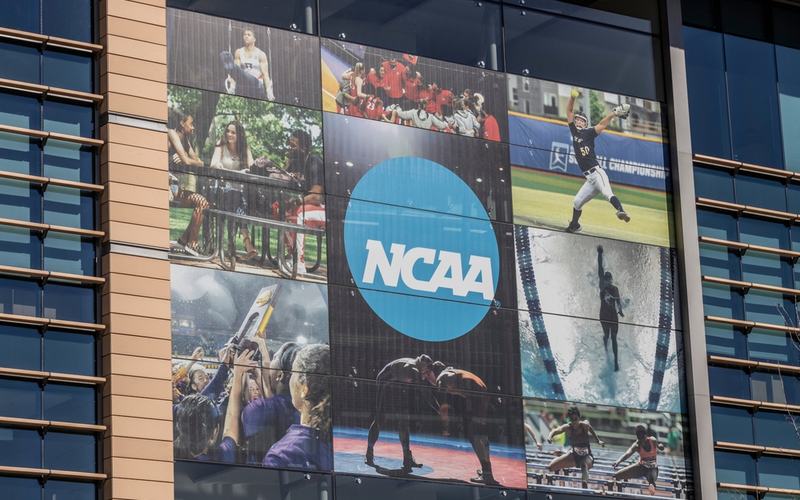
The Senate approved a bipartisan overhaul of college athletics Monday, sending the Protect College Sports Act to the House as lawmakers seek to impose national rules on NIL deals, transfers and athlete compensation.
The legislation passed 77-22, with roughly two dozen Democrats joining nearly all Republicans in support. Twenty-one Democrats and Republican Sen. Rand Paul of Kentucky voted against the measure.
The Protect College Sports Act was introduced by Sens. Ted Cruz, R-Texas, and Maria Cantwell, D-Wash., after years of negotiations over how Congress should respond to the rapidly changing college sports industry.
The legislation would establish a federal framework for name, image and likeness agreements while giving the NCAA greater authority to oversee compliance. It also includes provisions dealing with athlete transfers, compensation, health and safety, academic protections and the future of college sports competition.
Under the bill, student-athletes would generally be allowed one transfer without losing athletic eligibility. The legislation also places restrictions on certain coaching moves during a season and creates rules governing NIL agreements and disclosures.
Another major provision would give schools and conferences a limited antitrust exemption, allowing them to work together on certain aspects of college athletics, including the pooling and sale of media rights. Supporters argue that federal standards are needed to bring greater stability to a system increasingly shaped by lawsuits, state laws and conference-level decisions.
The legislation follows a 2025 court settlement that allowed colleges to begin directly sharing revenue with their athletes. The change significantly altered the financial structure of major college sports, with some football programs now facing roster payrolls exceeding $40 million.
Supporters of the legislation say those changes have created an increasingly expensive and unstable environment for schools and athletes. The Senate Commerce Committee has described the bill as an effort to provide greater stability while protecting student-athletes and preserving opportunities across college sports.
President Donald Trump has repeatedly supported congressional action on college sports, and the White House formally endorsed the legislation. A House companion was introduced in June by Rep. Michael Baumgartner, R-Wash.
Critics, however, argue the bill could limit athletes' compensation and legal protections while giving the NCAA and major athletic conferences greater control over the system. Some labor and civil rights organizations have also opposed portions of the legislation, particularly its antitrust provisions.
The bill now moves to the House, where its prospects remain uncertain. House lawmakers are not scheduled to return to Washington until after the November elections, leaving a limited window for the legislation to clear both chambers before the current congressional session ends.

Comments
No comments yet. Be the first to share your thoughts.