
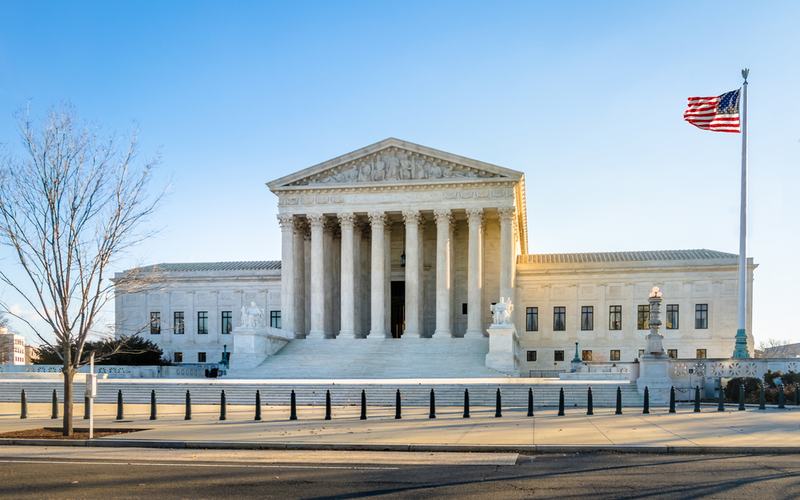
The Supreme Court on Friday rejected an effort to put a Republican-backed congressional map into effect for Missouri’s November elections, bringing an end to a lengthy legal fight over the state’s House districts.
The justices halted a ruling from the 8th U.S. Circuit Court of Appeals that would have required Missouri to use the newer map. Instead, the Supreme Court allowed the Missouri Supreme Court’s decision to stand, meaning the revised districts cannot take effect unless Missouri voters approve them in a November referendum.
As a result, voters will cast their ballots using the congressional boundaries that were in place during the 2022 and 2024 elections. Absentee voting began Tuesday under those districts, making a last-minute change particularly disruptive.
The Supreme Court said changing the boundaries while the election was already underway could create significant confusion. In an unsigned opinion, the justices wrote that forcing a return to the newer map “at this late date” could produce electoral chaos.
The dispute centered on a congressional map supported by President Donald Trump and Republican Gov. Mike Kehoe. Missouri lawmakers approved the new boundaries last year as part of a broader Republican effort to gain House seats through redistricting ahead of the midterm elections.
The proposed map would have significantly altered the Kansas City-area district represented by Democratic Rep. Emanuel Cleaver, removing portions of Kansas City while adding more heavily Republican rural areas. Republican state Sen. Rick Brattin won the GOP primary under those boundaries, while Cleaver faced no Democratic primary challenger.
Both Cleaver and Brattin remain their parties’ nominees despite the restoration of the previous district boundaries.
Republicans had viewed the revised map as a potential opportunity to expand their House delegation. Missouri currently has six Republican representatives among its eight congressional seats, while analyses of the proposed boundaries indicated Republicans could have had a viable path to seven.
A federal appeals court had ruled Monday that switching congressional districts after the primary election would violate the Constitution and ordered the lower court to prevent Missouri from using the older map. Friday’s Supreme Court action effectively overturned that directive.
The Missouri case was among roughly a dozen redistricting battles across the country involving efforts to alter House districts before the 2026 elections. With the existing Missouri map remaining in place, the Republican Party loses one potential avenue for gaining a House seat as both parties compete for control of Congress.

Comments
No comments yet. Be the first to share your thoughts.