
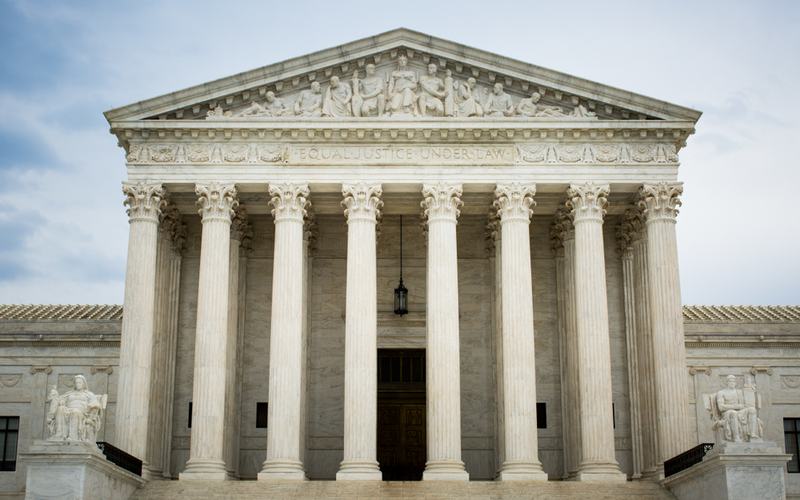
The Supreme Court agreed Monday to review a lawsuit challenging admissions policies at four elite public magnet middle schools in Montgomery County, Maryland. The case centers on claims that the district's lottery system discriminates against Asian American students in violation of the Constitution's equal protection guarantee.
The justices granted certiorari in Association for Education Fairness v. Montgomery County Board of Education, limited to the question of whether plaintiffs alleging racial discrimination in a facially neutral policy must first demonstrate that the targeted group suffered an aggregate disparate impact relative to its share of the applicant pool. Lower courts had dismissed the suit brought by a coalition of parents.
Montgomery County Public Schools uses a lottery for entry into its STEM and humanities magnet programs for sixth through eighth graders. Qualification for the lottery relies on students' test performance ranked against peers at their own elementary schools, a practice known as local norming. Plaintiffs argue this method was designed to reduce Asian American enrollment, which had been disproportionately high in high-performing schools, in order to boost spots for Black and Latino students.
The policy shift followed a consultant's report criticizing the racial composition of the programs. Asian American enrollment in the magnets dropped after the changes took effect. The suit, filed in 2020, contends the approach amounts to racial balancing prohibited by the 14th Amendment.
This marks the latest effort to extend the Supreme Court's 2023 ruling in Students for Fair Admissions v. Harvard and University of North Carolina, which barred explicit race-based admissions at colleges and universities. That decision left open issues involving indirect methods that alter racial outcomes without overt racial classifications.
The Association for Education Fairness, represented by the Pacific Legal Foundation, maintains that equal protection applies to individuals, not groups, and that evidence of intent to discriminate should suffice regardless of aggregate statistics. Montgomery County officials have defended the policy as race-neutral and pandemic-responsive, arguing it does not require proof of sole racial motivation for outcomes.
The court is expected to hear arguments next year and issue a decision by the end of June 2027. Similar challenges to admissions changes at selective schools in Boston and Fairfax County, Virginia, were previously declined by the justices.
The case tests the boundaries of permissible efforts to engineer diversity in K-12 settings following the higher education precedent. It arrives amid ongoing debates over merit-based selection versus policies that prioritize demographic representation.

Comments
No comments yet. Be the first to share your thoughts.