
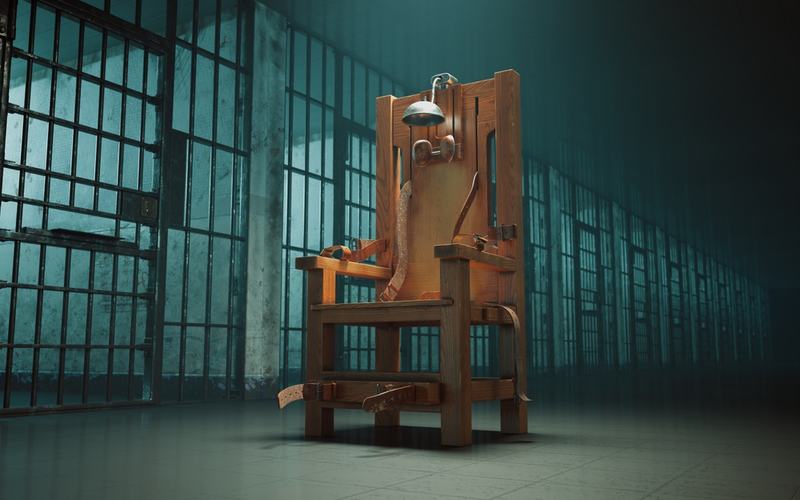
Three states carried out executions Thursday, with Florida, Alabama, and Indiana putting convicted murderers to death on the same day that California Gov. Gavin Newsom announced plans to commute hundreds of death sentences. The unusual timing brought renewed attention to the national debate over capital punishment and the contrasting approaches taken by state governments.
Florida executed Jesse Guardado, Alabama put Michael Taylor to death, and Indiana executed Jeffrey Weisheit. It marked the second time since August that three states had conducted executions on the same day, an occurrence that has otherwise been rare in recent years.
Florida's execution of Guardado brought the state's total to 19 this year, tying its previous annual record. The state has accounted for more than half of the nation's 35 executions so far in 2025 under Republican Gov. Ron DeSantis, who has signed the death warrants.
Guardado, 64, was pronounced dead at 6:13 p.m. following a lethal injection at a state prison in Raiford. He had pleaded guilty to fatally stabbing 75-year-old Jackie Malone inside her Walton County home in 2004 before stealing jewelry, cash and other valuables to purchase drugs. Malone had previously helped Guardado secure employment and housing.
Before the execution, Guardado apologized to the victim's family and his own relatives for the suffering he had caused. Malone's son, Patrick Malone, questioned opposition to the death penalty, asking whether critics consider the lasting consequences for victims' families.
DeSantis has defended the state's execution pace by emphasizing justice for victims and relatives who have waited decades for sentences to be carried out. Florida has two additional executions scheduled later this year.
In Alabama, 54-year-old Michael Taylor was pronounced dead at 6:10 p.m. following a lethal injection. Taylor was convicted of killing Ivan Moore, 83, and his wife, Lucille, 79, during a 1991 robbery at their home in Gadsden. He beat the couple with a metal bar before fleeing in their Cadillac and was later arrested in Birmingham.
Alabama Gov. Kay Ivey rejected appeals to commute Taylor's sentence to life in prison, with opponents arguing that he was only 19 when the murders occurred. Ivey defended the state's decision following the execution.
"California may let their criminals escape justice, but not Alabama," Ivey said. "Here, we enforce the law and always will."
The victims' relatives said the execution brought a measure of closure after 35 years of waiting, while expressing frustration over the lengthy appeals process. Taylor's execution method was changed to lethal injection after a judge ruled that nitrogen gas, which Taylor had previously selected, was unconstitutional.
Indiana executed 50-year-old Jeffrey Weisheit shortly after midnight Thursday at the state prison in Michigan City. Weisheit had admitted to killing his girlfriend's two children, Alyssa Lynch and Caleb, by setting a house fire in the Evansville area in 2010. He had sought clemency from Republican Gov. Mike Braun, asking that his sentence be changed to life in prison, but Braun declined.
Indiana Attorney General Todd Rokita described the execution as long-awaited justice for the two children. Weisheit had no final statement before his death.
The executions coincided with Newsom's announcement that he intends to commute hundreds of death sentences before leaving office. Experts have described the planned action as potentially the largest mass clemency effort in American history, although the details and timing remain subject to the governor's decisions.
The developments also come amid renewed scrutiny of execution procedures following Tennessee's September execution of Christa Pike, which was described as botched. Together, Thursday's executions and California's planned commutations highlight the continuing differences among states over whether and how the death penalty should be carried out.

Comments
No comments yet. Be the first to share your thoughts.