
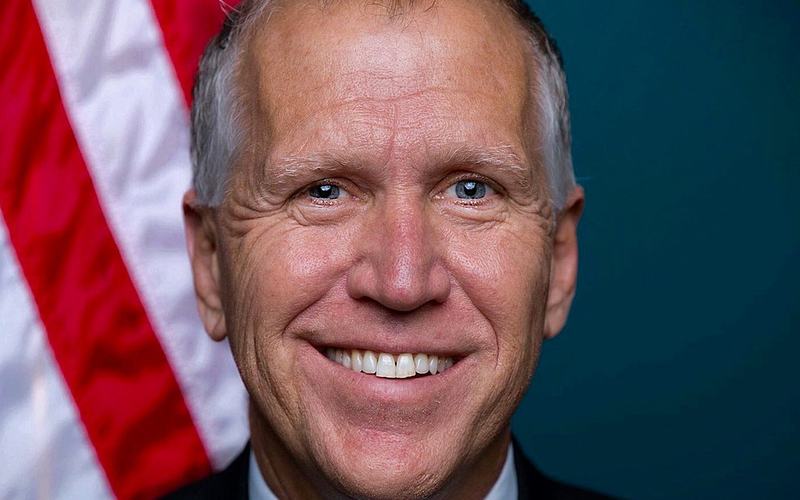
Republican Sen. Thom Tillis of North Carolina warned Sunday that President Donald Trump may be violating federal law by easing sanctions to allow Russian diesel to be sold worldwide, raising questions about the administration’s authority to loosen restrictions Congress enacted after Russia invaded Ukraine in 2022.
“I do believe there's a legitimate case for saying the president's not following the law,” Tillis said during an appearance on NBC’s “Meet the Press.”
The dispute centers on a general license issued Friday by the Treasury Department’s Office of Foreign Assets Control. The authorization permits the sale, delivery, and importation of Russian diesel, including into the United States, through April 7, 2027.
The move followed Trump’s announcement that Russia would supply approximately 4.8 million tons of diesel in several shipments. The proposed deliveries include more than 300,000 tons immediately, 500,000 tons in November, another 1 million tons afterward and an additional 3 million tons later.
Congress banned imports of Russian energy products in April 2022 following Moscow’s invasion of Ukraine. Lawmakers have not amended that ban to specifically accommodate the new arrangement, and the Treasury license cites Russia-related sanctions regulations without mentioning the congressional import prohibition.
The White House had not immediately responded to a request for comment on the legal questions surrounding the exemption.
The deal also comes weeks after Trump signed a Russia sanctions law targeting Russian officials and banks and authorizing tariffs of up to 100% on the top five importers of Russian oil or natural gas. The arrangement has raised questions about whether the administration will impose those penalties as planned.
Tillis connected the dispute to negotiations over government spending and military funding, warning that the decision could affect his willingness to support additional funding beyond current levels.
“If he wants my support for military operations and funding above current levels, the president needs to understand this is a problem,” Tillis said, adding that he was not the only Republican concerned about the arrangement.
The senator also argued that the deal could endanger American lives, pointing to Russia’s support for mercenaries and the Kremlin’s ties to Iran. He maintained that Moscow bears responsibility for ending the war in Ukraine, saying, “Russia is the one who can end this war.”
Trump has defended the diesel arrangement as a way to ease fuel costs. National diesel prices averaged $6.23 per gallon Friday, down from a record $6.52 on Sept. 22, according to AAA figures cited in coverage of the deal.
Ukrainian President Volodymyr Zelenskyy criticized the arrangement, warning that Moscow could respond with further aggression and deception rather than make concessions to end the conflict.
Beyond the Russia dispute, Tillis criticized the Department of War’s plan to livestream the scheduled Dec. 3 execution by firing squad of Nidal Hasan, the former Army psychiatrist convicted of killing 13 people at Fort Hood, Texas, in 2009. Tillis said Hasan should be executed but argued that broadcasting the execution could radicalize viewers and provide terrorist organizations with propaganda and recruitment material.
Tillis has also become a vocal critic of Secretary of War Pete Hegseth, whose confirmation he supported before later expressing regret over his vote. The senator called Hegseth “a failed leader” and said he “needs to get the hell out of the Department of Defense.”
Tillis announced in June 2025 that he would not seek reelection and is serving the final months of his second Senate term. His departure leaves North Carolina’s Senate seat open in the 2026 election, with Democrats seeking to capture the seat as they pursue a majority in the chamber.
The dispute over Russian diesel now presents another point of tension between Trump and a Republican senator who has increasingly challenged the administration’s decisions. At its center is whether the executive branch can authorize Russian energy imports under existing sanctions rules despite Congress’s earlier prohibition.

Comments
No comments yet. Be the first to share your thoughts.