
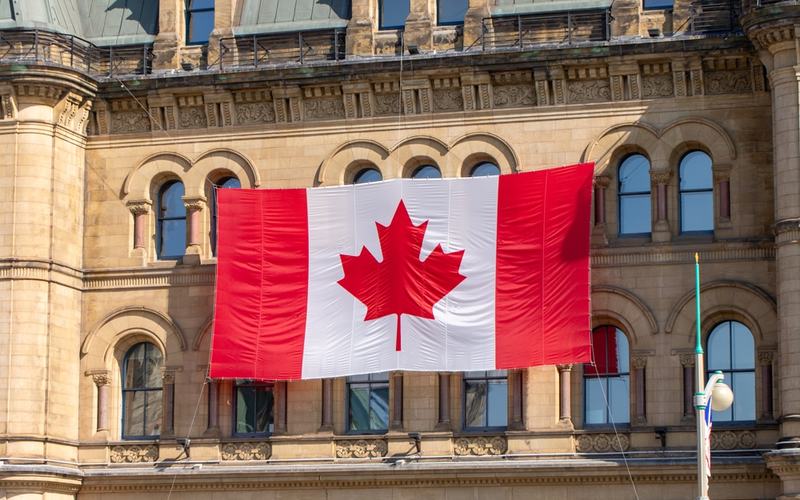
Canada’s military has modeled how the country might respond to a hypothetical U.S. invasion, a scenario Canadian officials describe as highly unlikely but one Prime Minister Mark Carney says his government has a responsibility to consider amid deteriorating relations with Washington.
The Canadian Armed Forces developed a conceptual scenario examining how American forces might attack from the south and how Canadian troops could respond, including the possibility of prolonged resistance if U.S. forces occupied territory. The planning was reported by The Globe and Mail earlier this year and has drawn renewed attention following Carney’s recent remarks about the possibility of American military action.
Carney told The New York Times that the risk was low and the scenario highly improbable, but said he had a responsibility to prepare for a range of possibilities. He characterized the process as risk management rather than a prediction that an invasion was imminent.
The distinction is important: military modeling allows governments to consider extreme contingencies without suggesting they expect those events to occur. The scenarios are conceptual frameworks, not evidence of an imminent attack or a detailed operational plan for an actual invasion.
The planning comes amid a sharp deterioration in relations between the neighboring countries. Trump has repeatedly spoken about making Canada the 51st state and has used tariffs and other economic pressure in disputes with Ottawa. Those statements, combined with broader disagreements over trade and defense, have prompted Canadian officials to reconsider assumptions about the reliability of their closest ally.
Despite the tensions, the United States and Canada remain deeply connected through trade and military cooperation. The two countries work together through the North American Aerospace Defense Command, or NORAD, which coordinates the defense of North American airspace. Canadian defense documents continue to describe joint continental defense as a central part of the bilateral security relationship.
The hypothetical invasion scenario reportedly considers the significant imbalance between the U.S. and Canadian militaries. Canadian planners have examined the possibility that, if conventional defenses were overwhelmed, resistance could continue through irregular tactics similar to those used by insurgent forces in other conflicts. Officials and experts have emphasized that considering such a scenario does not mean an attack is expected.
The episode reflects how far relations have shifted between two countries that have long been partners in continental defense and NATO. For Ottawa, the challenge is preparing for unlikely risks while preserving cooperation with the United States on shared security interests.

Comments
No comments yet. Be the first to share your thoughts.