
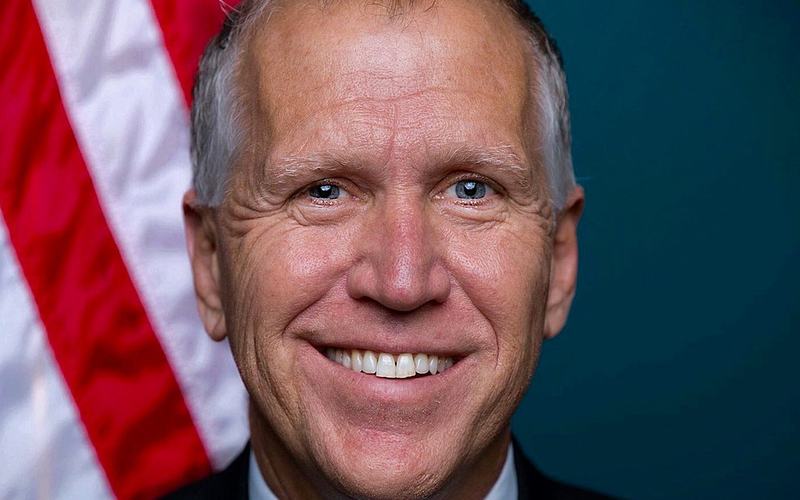
Republican Sen. Thom Tillis is warning that his party’s close alignment with President Donald Trump could hurt GOP candidates in North Carolina, arguing that Republicans need to demonstrate independence from the White House to win over unaffiliated voters in the battleground state.
Tillis made the remarks Thursday during a discussion with reporters at a clean energy conference in Raleigh, coinciding with the first day of early voting in North Carolina. He argued that Republicans too often defer to the executive branch when their party controls the White House, even when they have legitimate policy disagreements.
“What we have to do in the state is resonate with unaffiliated voters and have some separation from the president when you legitimately have a difference of opinion,” Tillis said.
Tillis is not seeking reelection after ending his Senate campaign following his vote against Trump’s signature tax-and-spending package, the One Big Beautiful Bill. His opposition centered on provisions that would significantly reduce federal Medicaid funding and shift more costs to the states. Trump subsequently backed finding another Republican to compete for the seat.
Tillis believes Republican support for the legislation and other Trump policies could damage the party’s chances in the November 3 election. His warning comes as a new WRAL/WSOC poll shows Democratic nominee Roy Cooper leading Republican Michael Whatley by 14 percentage points in the race to replace Tillis.
The poll also found that just 26% of independent voters approved of Trump’s job performance. Unaffiliated voters make up North Carolina’s largest voting bloc, making their support particularly important in statewide contests.
Whatley, the former chairman of the Republican National Committee, has built much of his campaign around supporting Trump’s agenda. According to Ken Alper, president of SurveyUSA, which conducted the poll, independents and moderates were favoring Cooper by more than 30 percentage points.
“We're seeing independents and moderates both breaking for the Democrat here by over 30 points, which is significant,” Alper said.
Still, the polling does not necessarily settle the contest. Whatley’s campaign maintains that undecided voters could determine the outcome, particularly if they make their decisions late in the campaign.
“Undecided voters who break late decide the election in North Carolina, and the majority of those late-breakers typically go Republican,” said DJ Griffin, a Whatley campaign spokesperson. The campaign says Whatley is canvassing across the state and focusing on voters who have not yet made up their minds.
Republican Rep. Tim Moore also weighed in on Tillis’ break with Trump, suggesting that disagreements with the president could be handled differently. In an interview with WRAL on Thursday, Moore said he has sometimes disagreed with Trump but might express those differences in another way.
“There may have been occasions where I've had a different opinion from the president,” Moore said, “and I perhaps go about expressing that a little differently as well.”
Tillis has offered a more detailed account of his relationship with Trump in his book, How to Lose Friends and Antagonize Presidents, which describes contentious conversations and messages with the president, including criticism of some of Trump’s advisers. Tillis has suggested that Whatley’s need to align himself with Trump could complicate his effort to win the Senate seat.
The dispute highlights a strategic challenge for Republicans in North Carolina: how to maintain support from Trump’s political base while appealing to independents who may be dissatisfied with the administration. Tillis argues that a focus on governing and responding to voters’ concerns is essential to maintaining Republican majorities.
“If we can convince Republicans just to be good governing bodies, then we win majorities,” Tillis said. “Until then, it's just going to be political ping-pong of the American people rejecting the last people who aren't listening to what the voters were really saying in the prior election.”

Comments
No comments yet. Be the first to share your thoughts.