
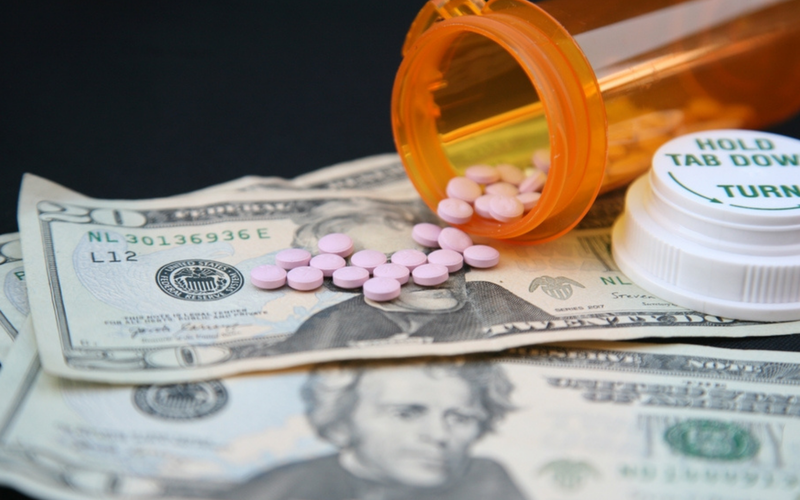
The Trump Administration announced on Thursday that the federal government will issue $500 refunds to nearly one million Americans who purchased health insurance through Obamacare exchanges in 30 states.
The payments address what the White House described as overcharges from excess user fees collected during the Biden administration.
The refunds target individuals who did not receive premium assistance and therefore paid the full cost of the fees, which were passed on through higher premiums.
Provided below are the eligible recipients:
- Alabama, Alaska, Arizona, Arkansas, Delaware, Florida, Hawaii, Indiana, Iowa, Kansas, Louisiana, Michigan, Mississippi, Missouri, Montana, Nebraska, New Hampshire, North Carolina, North Dakota, Ohio, Oklahoma, Oregon, South Carolina, South Dakota, Tennessee, Texas, Utah, West Virginia, Wisconsin, and Wyoming.
Checks will begin mailing in October 2026. The initiative draws from a reported $500 million surplus in federal accounts tied to Obamacare exchange operations.
White House officials framed the move as returning money directly to working families rather than allowing surplus funds to remain with the government or insurers.
This action is the latest initiative in the Trump Administration’s promise to lower medical prescription costs for Americans while holding pharmaceutical companies accountable for overcharging.
To give Americans better healthcare/ prescription medication options, the administration launched TrumpRx, a federal website that connects Americans with discounted prescription drug prices.
In early September, Trump announced that nine additional pharmaceutical companies have signed “Most Favored Nation” pricing agreements, expanding the administration's effort to lower prescription drug costs for Americans.
The new deals with Alcon, Astellas Pharma, BeOne Medicines, BridgeBio, CSL, Kyowa Kirin, Sun Pharma, Teva Pharmaceuticals, and UCB bring the total number of participating manufacturers to 26.
Patients have already realized substantial savings through the TrumpRx.gov platform launched earlier this year.
According to GovFacts, the term “Most Favored Nation” refers to “a rule of nondiscrimination enshrined in the agreements of the World Trade Organization. It requires a country to treat all its trading partners equally. If a WTO member country grants a special trade advantage to any one country– such as a lower customs duty on an imported product – it must extend that same advantage “immediately and unconditionally” to all other WTO members.”
This method is meant to ensure that every member country is entitled to the same treatment as the single “most favored” nation.
Shortened to MFN, the Trump Administration has utilized the term as an all-encompassing phrase meant to catch the United States up to foreign countries that have access to cheaper prescription medication.
But where is the difference between TrumpRx and Obamacare? Both offer affordable healthcare options, but when is one better than the other?
What is Obamacare?
The Patient Protection and Affordable Care Act, commonly known as Obamacare, was signed into law by President Barack Obama on March 23, 2010.
Early provisions took effect in 2010, including allowing young adults to stay on their parents' plans until age 26 and protecting against lifetime limits on essential benefits. The core expansions, including health insurance marketplaces, Medicaid expansion in participating states, and the individual mandate, launched in 2014. The Supreme Court upheld the law's constitutionality in 2012, with Chief Justice John Roberts providing the key vote by treating the mandate penalty as a tax.
The individual mandate penalty was later set to zero effective 2019. Enhanced premium tax credits during the pandemic period boosted marketplace enrollment to a peak of 24.2 million in 2025. Those temporary subsidies expired at the end of 2025.
Enrollment subsequently declined. Government data showed roughly 19.2 million people enrolled in ACA marketplace plans by mid-2026, down about 5 million from the prior year. Insurers reported average premium increases exceeding 50 percent for many consumers after the subsidies ended, prompting shifts toward lower-cost bronze plans with higher deductibles.
Administration officials attributed part of the drop to efforts targeting fraudulent enrollments, while analysts pointed primarily to higher out-of-pocket costs. The law still covers millions through marketplaces and Medicaid expansion in most states, though 10 states have not adopted the expansion, leaving some adults without coverage.
What is TrumpRx?
President Donald Trump's administration launched TrumpRx.gov on February 5, 2026, a federal website that connects Americans with discounted prescription drug prices.
The platform does not sell medications directly. Instead, it aggregates offers from pharmaceutical manufacturers that agreed to most-favored-nation pricing, allowing cash-paying patients to access lower costs comparable to those in other developed nations. Users receive coupons or links to manufacturer direct-to-consumer sites or partner pharmacies.
As of mid-2026, the platform listed more than 800 products. Administration officials have highlighted cumulative patient savings exceeding $400 million since launch. The site targets uninsured or cash-pay users, as discounts do not apply through insurance and do not count toward deductibles.
TrumpRx integrates GoodRx technology and builds on an executive order directing most-favored-nation pricing. The initiative represents a direct federal effort to reduce out-of-pocket costs without expanding government insurance programs.
Ultimately, Americans using both government institutions can summarize their uses as follows: TrumpRx emphasizes consumer choice and market incentives to reduce prices on listed drugs, while Obamacare focuses on expanding systemic coverage and imposing regulatory requirements on insurers.
The White House statement concluded that President Trump has been steadfast in putting the American people first over large insurance company profits by ensuring Obamacare funds, to the maximum extent possible, go to Americans.
“The government is going to pay the money directly to you—the big insurance companies lose, and the people of our country win,” the statement read.

Comments
No comments yet. Be the first to share your thoughts.