
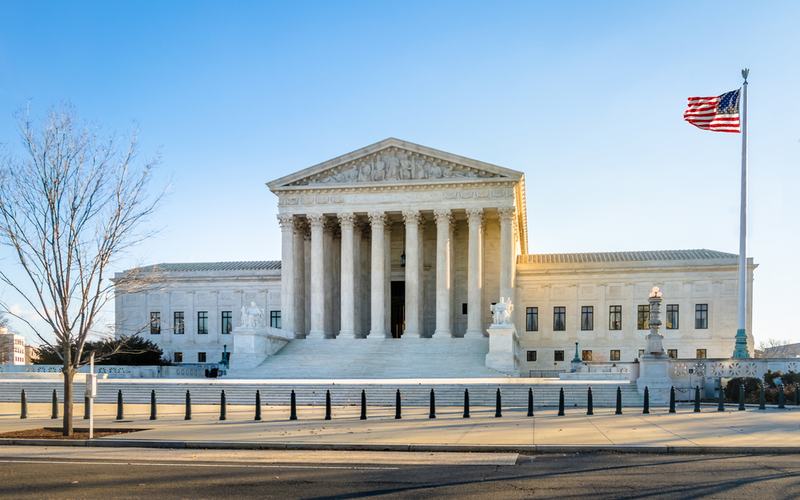
The U.S. Supreme Court has declined Missouri officials’ emergency request to reinstate a newly drawn congressional map for the November 2026 midterm elections, leaving the state’s previous congressional boundaries in place for the general election.
Missouri officials asked the Supreme Court to intervene after the Missouri Supreme Court unanimously ruled that the new congressional map could not be used in November unless it is first approved by voters in a statewide referendum. The emergency appeal was assigned to Justice Brett Kavanaugh, but the Supreme Court ultimately declined to block the Missouri court’s ruling.
The new map was approved by Missouri’s Republican-controlled Legislature after Gov. Mike Kehoe called lawmakers into a special session. The redistricting plan was designed to alter several congressional boundaries, including dismantling the Kansas City-based 5th Congressional District held by Democratic Rep. Emanuel Cleaver. Republicans argued that the new boundaries would give them an opportunity to gain another House seat.
The map was used during Missouri’s August congressional primaries. However, opponents collected more than 300,000 signatures seeking a statewide referendum on the new districts. The Missouri Supreme Court ruled that the referendum petition was valid and that the new map was effectively suspended until voters decide whether to approve it.
Missouri Attorney General Catherine Hanaway had urged the U.S. Supreme Court to intervene, arguing that changing the congressional boundaries after candidates had already competed in primaries would create confusion and violate federal election protections. Her office described the state Supreme Court's ruling as creating a constitutional crisis.
With the emergency appeal rejected, Missouri will use the congressional map adopted following the 2020 census for the November general election. The newly drawn map will remain subject to the statewide referendum, meaning voters will have the opportunity to determine whether the new districts should take effect for future elections.
The decision comes as congressional redistricting has become a major issue ahead of the 2026 midterms, with states across the country considering or adopting new district boundaries before the next congressional elections.

Comments
No comments yet. Be the first to share your thoughts.