
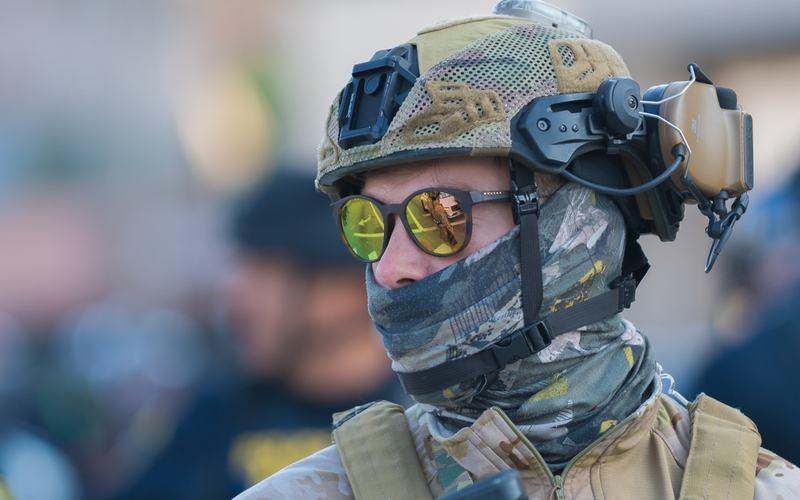
The Department of Justice filed a lawsuit on Wednesday in federal court in Newark, New Jersey, challenging a state law that bars law enforcement officers from wearing masks or disguises while interacting with the public and requires them to provide identification before making arrests or detentions.
The suit, docketed as Civil Case No. 3:26-cv-4755 in the U.S. District Court for the District of New Jersey, names the State of New Jersey, Democratic Gov. Mikie Sherrill, and Attorney General Jennifer Davenport as defendants. It seeks a declaration that the law violates the Constitution's Supremacy Clause and an injunction preventing its enforcement against federal officers from agencies including Immigration and Customs Enforcement, the FBI, DEA, and Customs and Border Protection.
Enacted as the Law Enforcement Officer Protection Act through Senate Bill S3114, the measure took immediate effect upon signing by Gov. Sherrill on March 25, 2026. It prohibits any "law enforcement officer", defined broadly to include federal, state, county, and local personnel, from wearing a mask or disguise during public interactions in the course of official duties. Narrow exceptions apply for undercover work, tactical operations, threats of retaliation, face shields that do not conceal the face, or medical reasons. Officers must also provide "sufficient identification," such as a badge, photo ID, or verbal disclosure of name and agency, before detaining or arresting someone, with limited exceptions for safety or investigative needs.
The DOJ argues the law impermissibly regulates federal operations, creating a forbidden "Hobson's choice" for agents: unmask and identify at the risk of doxxing, harassment, and violence, or face state penalties that obstruct their duties. The complaint details heightened dangers to federal officers, including an 8,000% surge in death threats and over 1,300% increase in assaults amid immigration enforcement, with gangs like MS-13 and Tren de Aragua targeting agents whose identities are exposed on online websites.
Before filing, the DOJ sent a formal letter on April 9 warning AG Davenport that the law could not apply to federal officers. Davenport replied on April 17, asserting its constitutionality and obligating federal compliance, while declining to rule out enforcement. Follow-up communications referenced a recent Ninth Circuit injunction against a similar California mask ban, but New Jersey provided no assurances.
The law emerged amid escalating tensions between the Trump administration's immigration crackdown and New Jersey's sanctuary policies. Gov. Sherrill signed it alongside bills limiting local cooperation with ICE and protecting resident privacy, criticizing "untrained, unaccountable, masked ICE agents" as a danger. Her administration has launched a portal for reporting ICE interactions and issued Executive Order No. 12 restricting federal access to state property. This marks at least the second DOJ suit against Sherrill's policies, following a February challenge to her executive order on arrests.
New Jersey officials defended the measure. AG Davenport called it a "thoughtful" response to "anonymized policing" that erodes trust and invites impersonation by criminals. Gov. Sherrill stated, "We're not going to tolerate masked, roving militias pretending to be well-trained law enforcement agents." The DOJ countered that such state interference jeopardizes public safety by chilling federal enforcement.
The case echoes a DOJ victory over California's analogous law, blocked by the Ninth Circuit in April. Legal observers anticipate a Third Circuit review, testing state authority over federal tactics in immigration hotspots.

Comments
No comments yet. Be the first to share your thoughts.