
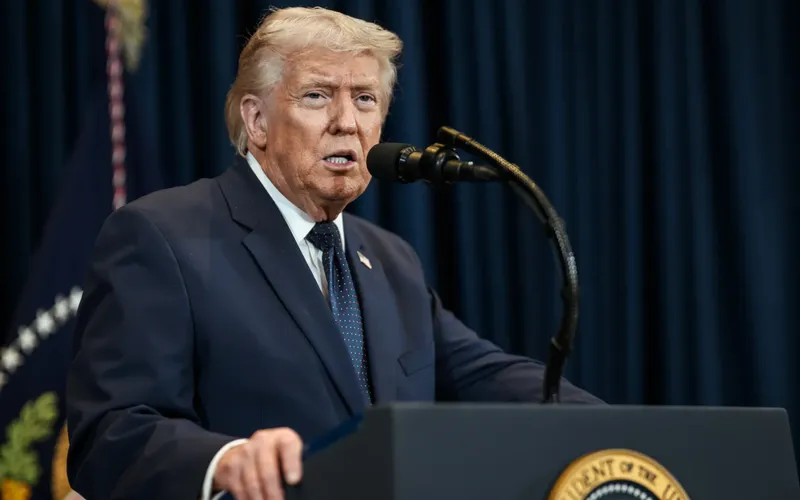
President Donald Trump on Sunday rejected calls from leading artificial intelligence executives to slow the development of advanced AI models, emphasizing the need for the United States to stay ahead of China in the technology race.
Speaking to reporters at the Irish Open golf tournament in Doonbeg, Ireland, Trump stated that America leads China in AI capabilities and must preserve that advantage. "We’re leading China in AI. We’re the most sophisticated country in the world, and frankly, I want to keep it that way because whoever wins AI wins," he said.
Trump downplayed concerns about potential risks, describing them as the work of "negative forces" raising issues that "won’t happen." He acknowledged that some guardrails could be considered but dismissed broader efforts to pause progress.
The comments came after Anthropic CEO Dario Amodei published an essay on Saturday urging a slowdown in AI model advancement to allow time for safety measures. OpenAI CEO Sam Altman and xAI's Elon Musk publicly endorsed the call.
Trump's position aligns with his administration's hands-off approach to regulation, which prioritizes innovation and national security over new restrictions. House Speaker Mike Johnson echoed this view on Sunday, warning against any moratorium that could allow China to gain ground.
"We cannot put a moratorium on this, because China will overlap us," Johnson said on CNN's State of the Union. He described the challenge as balancing model safety with strategic interests.
Democrats have seized on the administration's resistance to regulation as a midterm election issue, criticizing the lack of stronger oversight amid rapid AI advances. The topic has gained traction as some communities push back against new data center construction.
The Trump administration has implemented voluntary review processes for frontier AI models rather than mandatory rules. This framework reflects a focus on maintaining U.S. technological superiority without imposing burdens that could slow development.
Trump's remarks underscore the administration's view that unchecked regulation risks handing strategic advantages to adversaries, a stance that resonates with priorities on economic competitiveness and security.

Comments
No comments yet. Be the first to share your thoughts.