
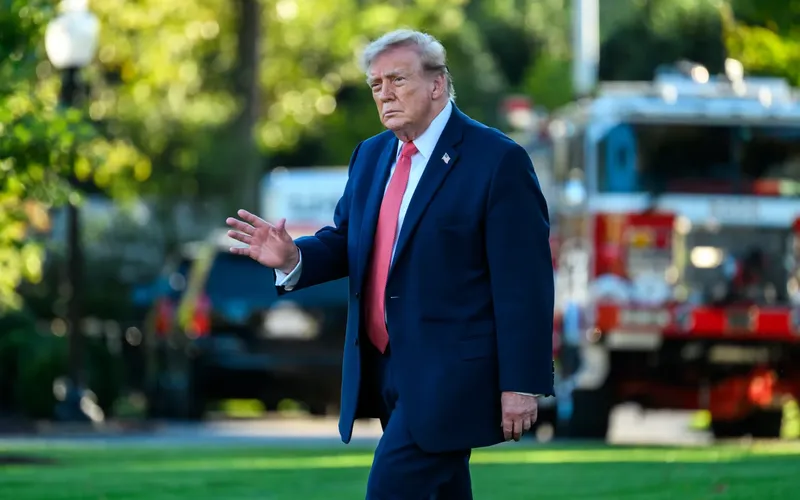
President Donald Trump signaled Thursday that he is open to negotiating healthcare policy with Democrats after their party secured control of both chambers of Congress in the November midterms.
Speaking to reporters at Mar-a-Lago, Trump said he expects a productive relationship with incoming Democratic leaders. “I have a feeling we’re going to end up with a very bipartisan relationship with the Democrats,” he stated. “I hope so, where we can take care of a lot of different things, healthcare and so many other things, and get them done.”
Trump noted that Democrats have reached out to avoid repeated vetoes and achieve results. He described the veto as a strong tool but said he is not looking to use it constantly over the next two years. “So, I have a feeling we’re going to have a great relationship, and a lot of things are going to get done,” Trump added. “Maybe more than would have gotten done the more traditional way.”
The comments build on earlier remarks from a White House news conference last week. Trump said he has received calls from influential Democrats interested in healthcare and immigration. “I’m open to great health care,” he said then. “Now, can it be what they want? No, but it can be a combination of what we all want.”
Democrats have outlined priorities that include restoring Affordable Care Act subsidies, reversing Medicaid funding changes from prior Republican legislation, lowering the Medicare eligibility age, and expanding benefits to cover dental, vision, and hearing services. Some incoming lawmakers have also floated broader single-payer proposals.
Trump has pointed to his administration’s TrumpRx initiative as one vehicle for addressing prescription drug costs. He has also shared social media content from Sen.-elect Abdul El-Sayed (D-Mich.) that rebranded Medicare for All ideas as “Trumpcare,” suggesting possible common ground on expanding access while controlling costs.
While expressing openness, Trump has reiterated his willingness to veto legislation that does not meet his standards. The remarks come as both sides prepare for divided government beginning in January 2027.
Analysts note that areas such as drug pricing and targeted coverage expansions could offer narrower paths for compromise compared to more expansive Democratic proposals.

Comments
No comments yet. Be the first to share your thoughts.