
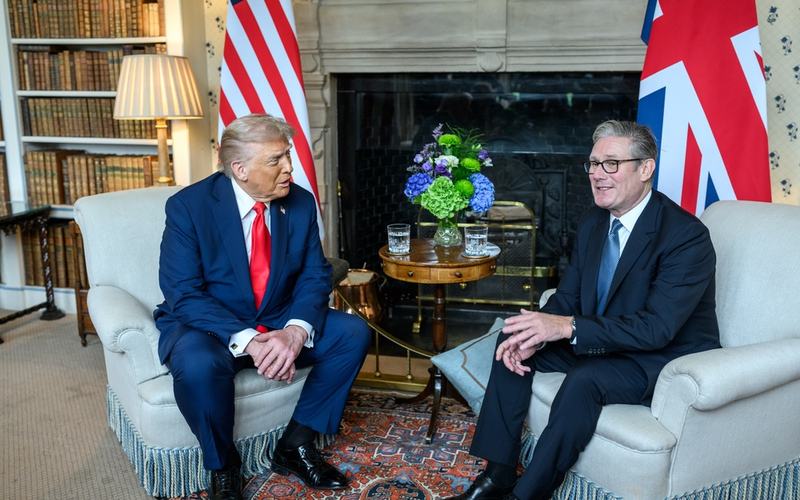
Britain will not participate in the United States' planned naval blockade of the Strait of Hormuz, officials confirmed Sunday after President Donald Trump announced the operation.
Trump declared on Truth Social that the U.S. Navy would begin blockading ships entering or leaving the strait effective immediately, targeting vessels paying tolls to Iran. The operation starts Monday at 10 a.m. ET, enforced by U.S. Central Command against traffic to Iranian ports while allowing passage to non-Iranian destinations. He warned that any Iranian fire on U.S. forces or peaceful vessels would prompt a severe response.
The move follows the collapse of U.S.-Iran peace talks in Islamabad, Pakistan, where Vice President JD Vance negotiated for 21 hours. Iran refused to abandon its nuclear ambitions, dooming the discussions despite a fragile two-week ceasefire announced last Tuesday that expires April 22.
Iran has maintained de facto control over the Strait of Hormuz since early March, imposing multimillion-dollar tolls on shipping and disrupting oil exports from the Persian Gulf. The chokepoint carries about 20% of global oil trade, and its partial closure has driven energy prices higher amid the ongoing 2026 Iran war, which began February 28 with U.S.-Israeli strikes.
A UK government spokesman emphasized support for freedom of navigation, stating the strait must not be subject to tolls and that Britain is working urgently with France and partners on a coalition to protect shipping. The UK has mine-hunting drones in the region for potential clearance operations, but views these as distinct from Trump's blockade, which it will not join with warships.
Prime Minister Keir Starmer reiterated that Britain would not be dragged into the war, guided by its principles and values. Health Secretary Wes Streeting called Trump's rhetoric incendiary and provocative. Starmer previously declined UK base access for initial U.S. strikes, limiting use to defensive actions against Iranian missiles.
President Trump criticized Starmer in a Fox News interview, likening his caution to Neville Chamberlain and noting Britain's minesweeper contributions fell short. The decision strains the U.S.-UK alliance as the UK pursues separate talks with up to 40 nations to reopen the Strait diplomatically.
Oil prices spiked, and stock futures fell following Trump's announcement, underscoring risks to global energy markets if tensions escalate further.

Comments
No comments yet. Be the first to share your thoughts.