
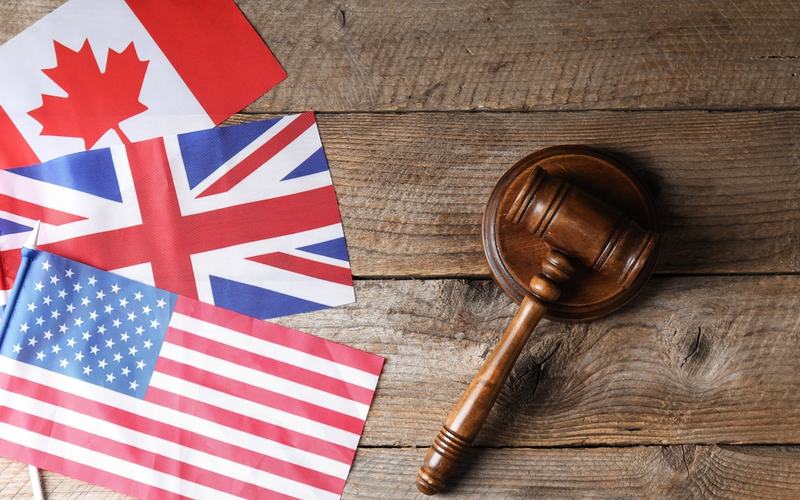
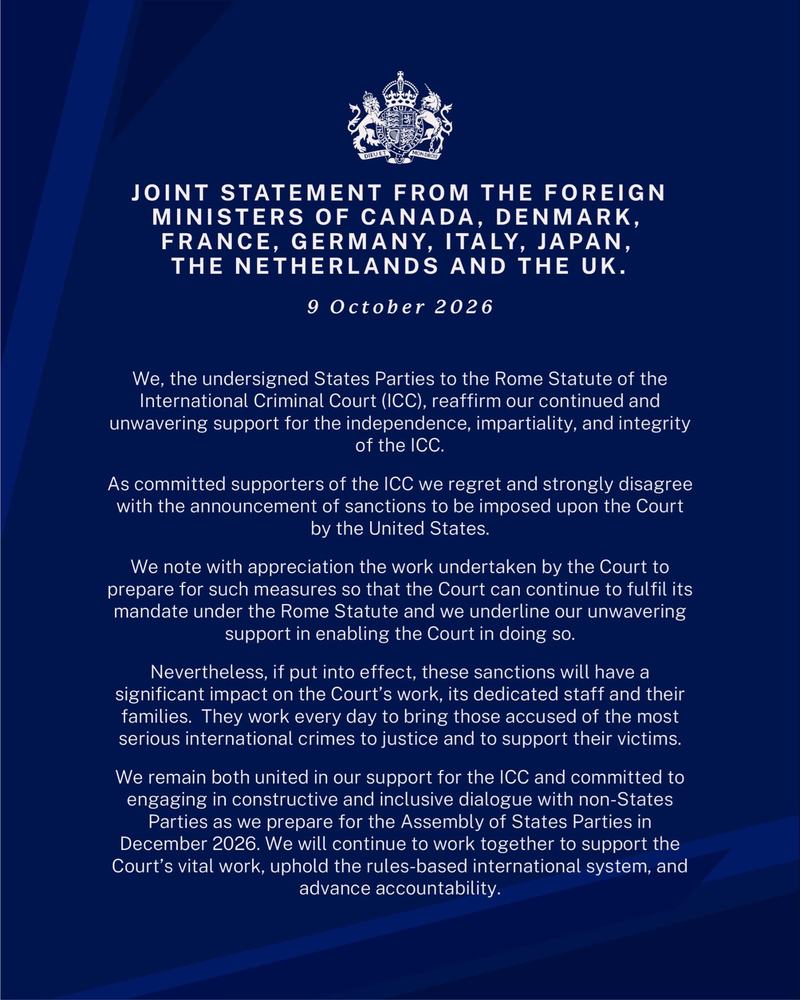
Foreign ministers from Canada, Denmark, France, Germany, Italy, Japan, the Netherlands and the United Kingdom released a joint statement on Friday disagreeing with the United States' decision to impose sanctions on the International Criminal Court.
The statement reaffirmed the countries' "continued and unwavering support for the independence, impartiality, and integrity of the ICC." The ministers noted that the sanctions, if implemented, could significantly affect the court's work, its staff and their families.
US Secretary of State Marco Rubio announced the sanctions earlier on Friday, describing the ICC as a "rogue court" and stating that the measures would ban transactions with the court to cripple its operations. The sanctions include a six-month grace period and exemptions for certain transactions, such as those related to pensions and detainees.
The US action stems from longstanding concerns over the ICC's investigations into American military personnel in Afghanistan and its arrest warrants targeting Israeli officials, including Prime Minister Benjamin Netanyahu. Rubio called on US allies that are ICC members to rein in the court, warning that Washington would otherwise continue efforts to limit its reach.]
"Our message is clear: the United States and its people are not subject to the jurisdiction of the ICC. Both parties agree on this, but only President Trump has the resolve to take the action needed to end this threat for good. Either the ICC will end its threats, or we will end the ICC. We expect our allies, many of whom are part of the ICC and that rely on American servicemembers for their defense, to rein in the court," Rubio said in a press statement.
The joint statement from the eight nations highlighted preparations by the ICC to maintain operations and committed the signatories to constructive dialogue with non-member states ahead of the Assembly of States Parties in December 2026. They emphasized upholding the rules-based international system and advancing accountability for serious international crimes.
The ICC condemned the sanctions as an attempt to obstruct justice and an assault on the rule of law. The court's response urged member states to defend its mandate.
This development underscores ongoing tensions between the United States and several close allies over the ICC's role and authority. Notably, the United States has never joined the Rome Statute and maintains that the court lacks jurisdiction over its citizens and those of non-member states.

Comments
No comments yet. Be the first to share your thoughts.