
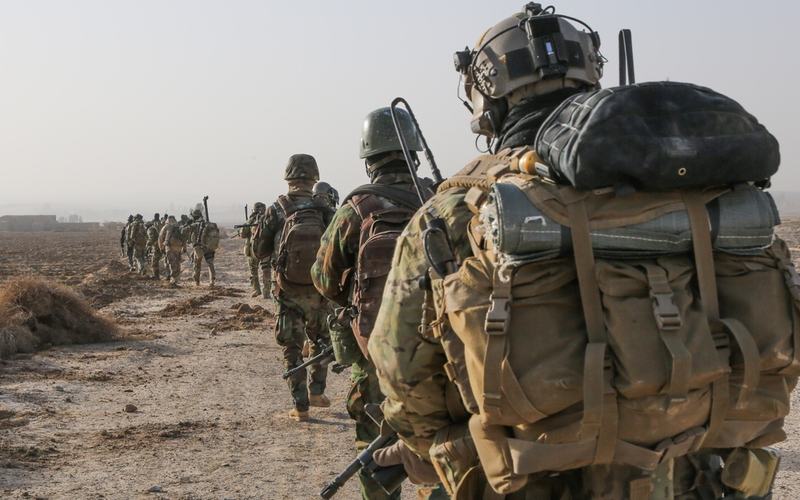
The U.S. Army is reportedly moving approximately 600 soldiers from the 10th Mountain Division at Fort Drum, New York, to Latin America as part of an expanding effort to combat terrorist drug cartels. The troops are expected to train regional forces and could eventually support raids and other operations targeting cartel networks, according to a report published Wednesday.
The reported deployment comes as the Trump administration expands the Shield of the Americas initiative, a regional coalition focused on combating drug trafficking organizations and strengthening security cooperation among participating countries. The coalition initially included 13 nations, including the United States, and has since grown to 19 members.
Although the U.S. government has not officially confirmed the reported movement of the 600 soldiers, American forces have already participated in operations alongside regional partners. In September, U.S. troops worked with Ecuadorian forces in an operation targeting members of Mexico's Cartel Jalisco New Generation, known as CJNG, who were operating in Ecuador.
Authorities said the cartel members had established operations to help move narcotics from other countries north through Mexico and ultimately into the United States. The operation demonstrated how cartel networks can extend beyond Mexico's borders, making international intelligence sharing and cooperation important components of efforts to disrupt their activities.
Mexico remains a central point of contention in the regional strategy. President Claudia Sheinbaum has repeatedly rejected the prospect of U.S. troops conducting military operations inside Mexico, arguing that such a deployment would violate the country's national sovereignty.
Her government has nevertheless cooperated with Washington on certain security matters. Mexico's top security official, Omar García Harfuch, has coordinated intelligence sharing with American officials, while Mexican forces have carried out raids against suspected criminal organizations.
That cooperation has produced arrests, but disagreements persist over how aggressively Mexico should pursue individuals accused of having connections to cartel networks, particularly when political figures are involved. The dispute has become a recurring source of tension between the two governments as Washington presses for stronger action against the organizations responsible for trafficking drugs into the United States.
One prominent example involves Sinaloa Gov. Rubén Rocha Moya, whom the U.S. Department of Justice has criminally indicted on drug-trafficking conspiracy and weapons charges. Sheinbaum and her administration have publicly defended the governor and questioned whether the United States has provided sufficient evidence to support the allegations. The charges remain allegations unless established in court.
Mexico is not the only country outside the coalition. Brazil, Cuba, Nicaragua and Venezuela have also been identified as opponents of the initiative, although their positions and relationships with Washington differ.
The reported deployment would further expand the American military presence supporting partner nations in the region. Training local forces could strengthen their ability to confront cartel networks, while potential operational support would mark a more direct role for U.S. personnel in regional counter-cartel efforts.
For now, the precise missions and locations of the reported 600 soldiers have not been officially confirmed. Their deployment would represent another step in the Trump administration's broader effort to enlist regional governments in combating drug cartels and disrupting the networks that supply illegal narcotics to the United States.

Comments
No comments yet. Be the first to share your thoughts.