
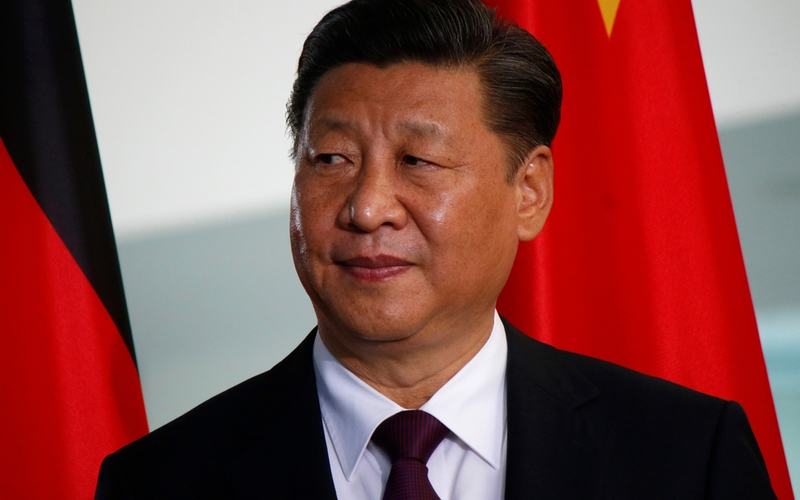
Rumors about Chinese President Xi Jinping's health have surfaced following the BRICS Summit in India, after Indian Prime Minister Narendra Modi appeared to check on Xi when he seemed uncomfortable during the summit. Xi later skipped a gala dinner hosted by Modi, fueling further speculation online, although there has been no official confirmation that Xi suffered a medical emergency. Xi attended the summit, met with Modi and returned to Beijing after completing his scheduled visit.
While the reports remain unconfirmed, the renewed speculation has also prompted discussion about who could eventually succeed Xi if China's leadership changes. Two senior Communist Party officials frequently mentioned in succession discussions are Premier Li Qiang and Vice Premier Ding Xuexiang.
Li Qiang
Li Qiang is China's premier and one of the country's most senior political figures. He joined the Chinese Communist Party in 1983 and began his political career in Zhejiang Province, eventually serving as party secretary of Yongkang and Wenzhou before becoming governor of Zhejiang from 2012 to 2016. He later served as party secretary of Jiangsu and was elevated to the Politburo in 2017.
Li served as party secretary of Shanghai from 2017 to 2022 before joining the Politburo Standing Committee. In 2023, he became premier, succeeding Li Keqiang. His long political relationship with Xi dates back to their time working together in Zhejiang, placing Li among the officials closely associated with Xi's political network.
Li has generally been associated with support for China's private sector and economic reform. During his career, he has advocated reducing bureaucratic interference in the economy, encouraging entrepreneurship and promoting technological innovation. He has also worked to reassure private businesses and foreign companies following China's strict COVID-19 restrictions and regulatory campaigns.
As premier, Li has been responsible for major portions of China's economic policy and has continued to emphasize economic growth, business investment and technological development. His background in provincial government and economic administration distinguishes him from some other senior officials whose careers have primarily centered on Communist Party administration.
Ding Xuexiang
Ding Xuexiang is China's first-ranked vice premier and a member of the Politburo Standing Committee. He is also considered one of Xi Jinping's longest political allies.
Ding worked with Xi during Xi's time as party secretary of Shanghai before following him to Beijing. From 2013 to 2023, Ding served as director of the office of the Communist Party general secretary, placing him close to Xi during a period in which Xi consolidated his position as China's top leader. Ding later served as director of the CCP General Office from 2017 to 2023.
Ding entered the Politburo Standing Committee in 2022 and became vice premier in 2023. Unlike Li, whose career has included extensive provincial and economic administration, Ding's career has been heavily focused on Party administration, policy coordination, and work directly supporting China's top leadership.
Ding has also taken on a prominent role in China's technology and innovation agenda. He has promoted technological development, artificial intelligence and scientific innovation, while emphasizing the importance of developing China's domestic technological capabilities.
Ding has additionally played a role in policy involving Hong Kong and Macau. He has called for greater attention to economic development and opportunities for young people while also emphasizing national security and the implementation of Hong Kong's security legislation.
For now, neither Li nor Ding has been publicly designated as Xi's successor. The discussion surrounding both men remains speculative, particularly as China's political succession process is not publicly transparent. The recent rumors surrounding Xi's health have nevertheless renewed attention on the senior officials who could potentially play a role in China's leadership if or when a transition occurs.

Comments
No comments yet. Be the first to share your thoughts.