
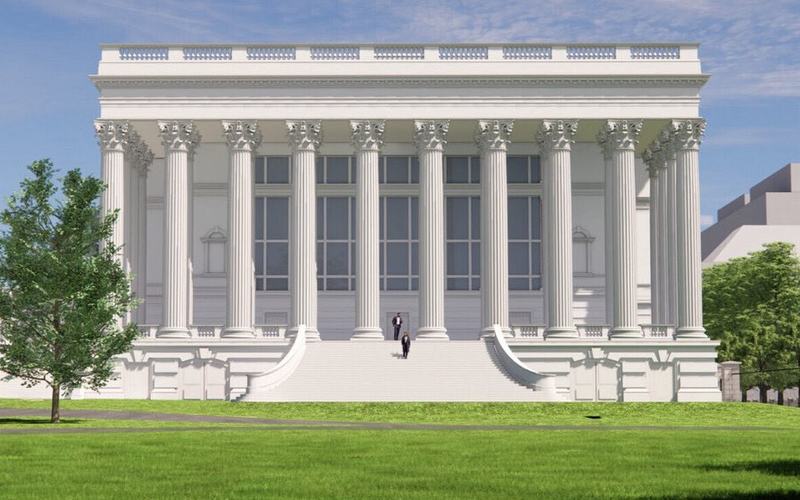
A three-judge panel of the U.S. Court of Appeals for the District of Columbia Circuit ruled on April 17 that the Trump administration can continue work on its $400 million White House ballroom project, temporarily blocking a preliminary injunction issued by U.S. District Judge Richard Leon the day before.
The decision marks another twist in the ongoing legal battle over President Donald Trump's ambitious plan to demolish the historic East Wing and replace it with a 90,000-square-foot neoclassical ballroom capable of hosting 999 guests, along with an extensive underground security complex. The project, funded entirely by private donors for the ballroom portion while taxpayer money covers security upgrades, aims to provide a permanent venue for large events and enhance protections against modern threats like drones, ballistic missiles, and biohazards.
The lawsuit originated in December 2025 when the National Trust for Historic Preservation challenged the administration's authority to proceed without congressional approval, arguing the East Wing demolition violated federal preservation laws. Judge Leon, a George W. Bush appointee, first halted above-ground construction on March 31, suspending the order briefly, and reiterated the block on April 16, allowing only underground work on bunkers, medical facilities, and other security features.
Leon ruled that national security claims do not provide a "blank check" for otherwise unlawful activity and that the ballroom itself requires legislative authorization. The administration appealed, contending that the halt endangered the president, his family, and staff by leaving the site exposed and that security elements are inseparable from the overall structure.
On April 11, the appeals court had previously issued a 2-1 order permitting work through April 17 while directing Leon to reassess security implications. Following Leon's renewed injunction, the panel extended the stay without ruling on the merits, scheduling oral arguments for June 5.
President Trump, who has described the ballroom as a "Great Gift to America," lashed out at Leon on social media, calling him a "Trump-hating" judge intent on undermining national security. Trump argued the facility's features, including missile-resistant steel, blast-proof glass, and military installations, are essential for future presidents' safety during events.
Despite judicial setbacks, the project secured final approval from the National Capital Planning Commission on April 2. Construction on underground components continues, with the full complex projected to take at least two years.
Neither the White House nor the preservation group immediately commented on the latest appeals court order. The administration may seek Supreme Court intervention as the stay provides breathing room amid the protracted dispute.

Comments
No comments yet. Be the first to share your thoughts.