
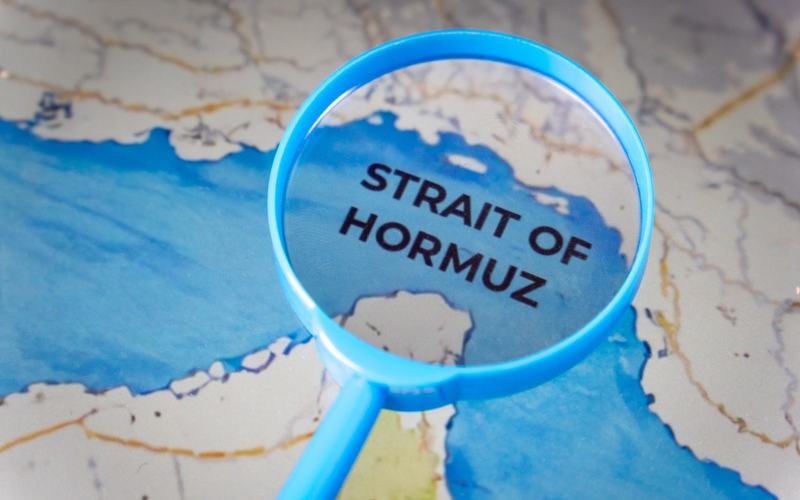
Commercial shipping through the Strait of Hormuz has fallen to its lowest level since May following a series of U.S. and Iranian strikes on vessels in and around the strategically important waterway.
An average of 10 commodity ships per day transited the strait during the 10 days ending Sunday, according to shipping analytics firm Kpler. The 10-day moving average fell from more than 15 on Friday and nearly 13 on Saturday.
Traffic dropped sharply over the weekend. Only two vessels crossed the strait Saturday, followed by six on Sunday, with most using the Iranian side of the waterway.
The decline came after U.S. forces struck three Iranian oil tankers Saturday, according to U.S. Central Command. One of the strikes occurred near Kharg Island, Iran's main oil export hub, after Iran's Islamic Revolutionary Guard Corps launched attacks against U.S. warships in the region.
Iran subsequently said its forces targeted three oil tankers traveling through unauthorized routes in the strait, as well as three additional U.S. vessels elsewhere in the region. The Iranian tankers were identified as Downy, Stark I and Kylo, also known as Noxen.
Maritime intelligence firm Marisks described the exchange as a major escalation in the maritime conflict, warning that commercial tankers were increasingly becoming part of the confrontation between the two countries.
The United Kingdom Maritime Trade Operations has recorded 27 projectile strike incidents involving vessels in and around the Strait of Hormuz since July 6. Several ships have sustained damage in those incidents.
Kpler data showed that one very large crude carrier and three bulk carriers carrying metals, grains or oilseeds entered the strait on Sunday. A tanker carrying refined petroleum products that had loaded at a Saudi port attempted to leave the waterway but was turned back, according to LSEG data.
No very large crude carrier has exited the Strait of Hormuz since Wednesday, according to Kpler.
The Strait of Hormuz is a critical route for global energy supplies, making the sharp reduction in commercial traffic a significant development for oil markets and international shipping. The latest attacks have increased concerns about whether commercial vessels will continue using the waterway amid the escalating U.S.-Iran conflict.

Comments
No comments yet. Be the first to share your thoughts.