
House Republicans intensified their push for a comprehensive overhaul of Department of Homeland Security funding Monday, rejecting a Senate-approved bill as insufficient and prolonging the agency's record 72-day partial shutdown.
The standoff, now the longest DHS shutdown in history, began in mid-February and has left thousands of federal workers facing paycheck delays, with the department's $10 billion rainy-day fund expected to run dry by week's end. Agencies like the Transportation Security Administration, Federal Emergency Management Agency, Coast Guard, and Cybersecurity and Infrastructure Security Agency have struggled to hire staff or retain employees, exacerbating vulnerabilities highlighted by Saturday night's shooting at the White House Correspondents' Association Dinner involving Secret Service agents.
Senate Republicans unanimously passed a bipartisan "skinny" bill nearly a month ago to fund most DHS operations except Immigration and Customs Enforcement and Customs and Border Protection, prioritizing pay for TSA screeners and disaster response. The measure has twice cleared the Senate but languishes in the House, where Speaker Mike Johnson called it "haphazardly drafted" with "problematic language." Johnson stressed urgency, noting DHS Secretary Markwayne Mullin's warning that funds are exhausted and blaming Democrats for "playing games."
House GOP leaders, including Majority Leader Steve Scalise, insist on sequencing: first approving a GOP-only reconciliation bill for ICE and Border Patrol by President Trump's June 1 deadline, then addressing the broader package. Conservatives like Freedom Caucus Chairman Andy Harris deemed the Senate plan "totally unacceptable," refusing support for any bill zeroing out immigration enforcement. Rep. Clay Higgins added it should be "more expansive," while Rep. Pat Harrigan advocated adding defense funding, spending cuts, and cost-of-living measures.
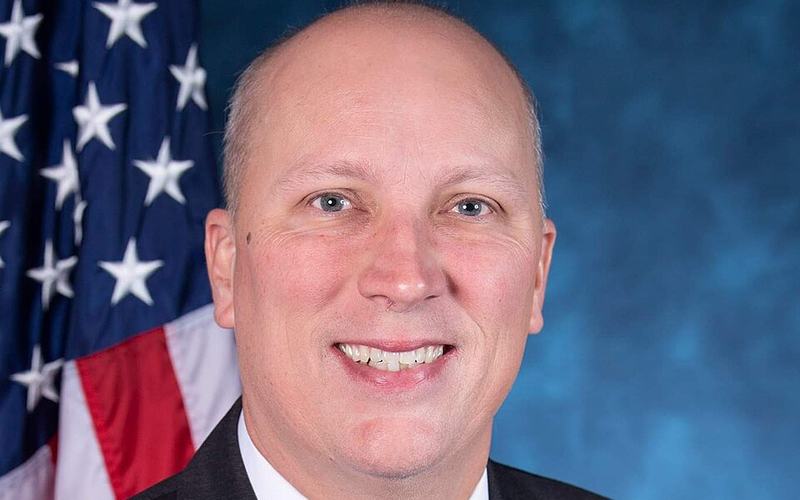
Hardliners, including Rep. Chip Roy, demand ties to the SAVE Act for voter ID, deficit reduction, Trump's elections overhaul, and even a secure White House ballroom post-shooting. Johnson faces a "nightmare week" of votes, compounded by FISA renewal and farm bill pressures, with Senate Majority Leader John Thune offering only "technical changes."
The House GOP's FY2026 Homeland Security Appropriations Act proposes $64.4 billion in discretionary funding, emphasizing border security with $18.3 billion for CBP, $10 billion for ICE, $3.8 billion for detention, and $513 million to sustain 22,000 Border Patrol agents. Priorities include countering fentanyl, eliminating DEI programs, cutting NGO funding tied to prior border policies, and bolstering cybersecurity against China.
Trump has used executive authority for back pay, but Republicans warn of border risks without resolution. Leadership aims to pass the Senate budget resolution next week to enable reconciliation, though internal divisions persist ahead of midterms.

Comments
No comments yet. Be the first to share your thoughts.