
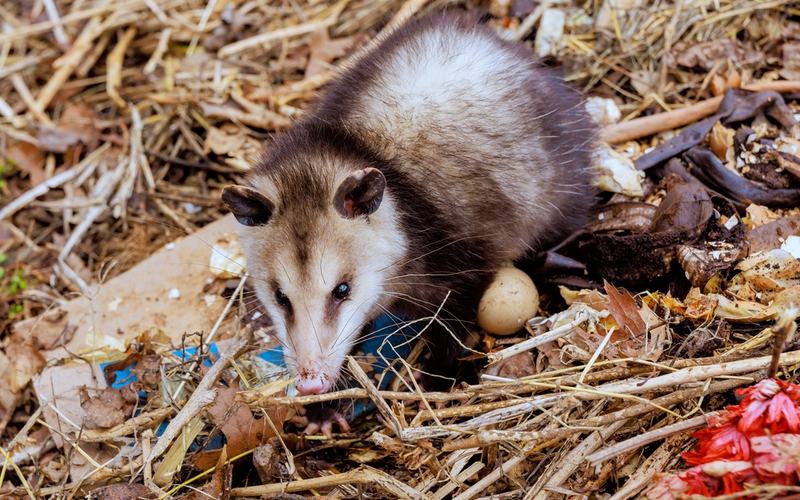
Scientists in Florida have turned opossums into unwitting allies against invasive Burmese pythons by fitting them with radio collars that continue transmitting signals even after the snakes swallow them whole.
The technique emerged in 2022 during a study tracking small mammal movements along Florida's southern coast near the Crocodile Lake National Wildlife Refuge in Key Largo. Researchers A.J. Sanjar, Michael Cove from the North Carolina Museum of Natural Sciences, and refuge manager Jeremy Dixon initially collared opossums and raccoons to study their behavior in urban-wildland fringes. When pythons consumed the animals, the collars' mortality signals triggered by lack of movement persisted inside the snakes, revealing their locations.
Teams now follow these signals to euthanize the pythons and recover the collars for reuse. The devices have shifted from expensive GPS units to cheaper VHF radio trackers costing $190 each, which last nearly two years and focus on mortality detection rather than constant positioning. Opossums proved ideal due to their smaller home ranges and easier handling compared to raccoons, which pythons also favor.
Burmese pythons, introduced via the exotic pet trade in the 1970s and established in the wild since 1979, have ravaged the Everglades ecosystem. They reduced raccoon populations by 99 percent, opossums by 98 percent, and bobcats by 88 percent, while spreading parasites and threatening endangered species like Key Largo woodrats and cotton mice. The snakes continue expanding northward, with the U.S. Geological Survey documenting rapid range growth.
Over two summers, the collars led to the removal of 18 large pythons, many exceeding 8 feet, and reproductively mature. Currently, 32 collared opossums roam the field, with plans to deploy at least 40 more by summer's end. Collaborators, including the Conservancy of Southwest Florida, Florida Fish and Wildlife Conservation Commission, and South Florida Water Management District, aim to expand statewide, targeting the northern invasion front where opossums remain abundant. With additional funding and staff, researchers hope to collar 200 opossums.
"We need everything that we can find to remove as many pythons as possible," Cove said. Dixon emphasized the method documents natural predation without added risk: "We’re not putting these animals out there and in harm’s way. Harm’s way is there. We’re just documenting what’s happening."
This approach supplements other efforts like Python challenges and detection dogs, offering a low-tech way to pinpoint snakes in hard-to-access areas and protect the Everglades' biodiversity.

Comments
No comments yet. Be the first to share your thoughts.