
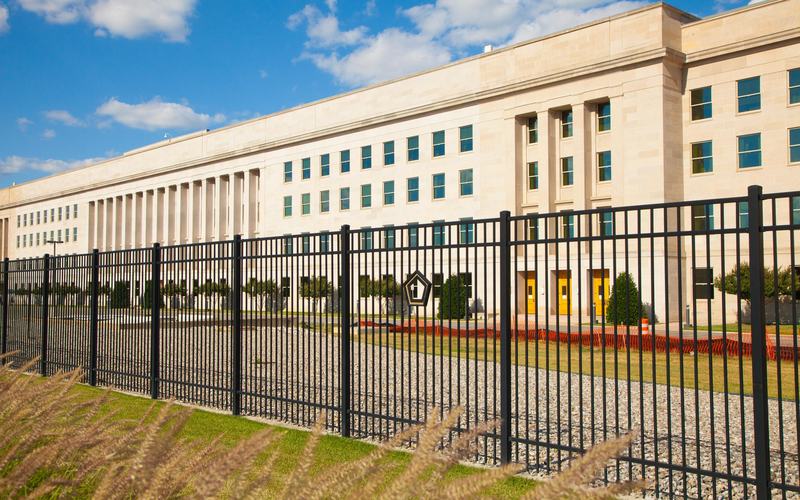
The Pentagon announced Friday that it has finalized agreements with seven leading technology companies to deploy their artificial intelligence models on classified military networks. The deals with SpaceX, OpenAI, Google, Nvidia, Reflection, Microsoft, and Amazon Web Services will enable the U.S. military to integrate advanced AI capabilities into its most secure systems.
The Department of War stated the partnerships will "accelerate the transformation towards establishing the United States military as an AI-first fighting force and will strengthen our warfighters’ ability to maintain decision superiority across all domains of warfare." Specifically, the AI tools aim to streamline data synthesis, elevate situational understanding, and augment warfighter decision-making in complex operational environments.
More than 1.3 million Department of Defense personnel already use the official AI platform GenAI.mil, which has reduced task times from months to days for warfighters, civilians, and contractors. The new agreements extend these capabilities to classified networks at Impact Levels 4, 5, 6, and potentially higher, allowing secure access to frontier AI models.
Pentagon Chief Technology Officer Emil Michael emphasized the need for multiple providers, stating, “What we’ve learned... is that it’s irresponsible to be reliant on any one partner." He noted the inclusion of both proprietary models and infrastructure from companies like Microsoft and AWS, as well as efforts to develop open-source options as an "American alternative" to foreign AI advances, particularly from China.
The move follows prior deals with OpenAI and Google, and comes after a public dispute with Anthropic, which declined broad access to its Claude model over concerns including potential surveillance and autonomous weapons use. Anthropic's exclusion prompted the Pentagon to designate it a supply chain risk, leading to ongoing legal battles.
These agreements align with the Department of War's broader strategy to rapidly adopt AI for targeting, logistics, and supply chain management, ensuring U.S. forces maintain a technological edge amid rising global threats. The partnerships include provisions for human oversight in autonomous operations and adherence to constitutional protections.

Comments
No comments yet. Be the first to share your thoughts.