
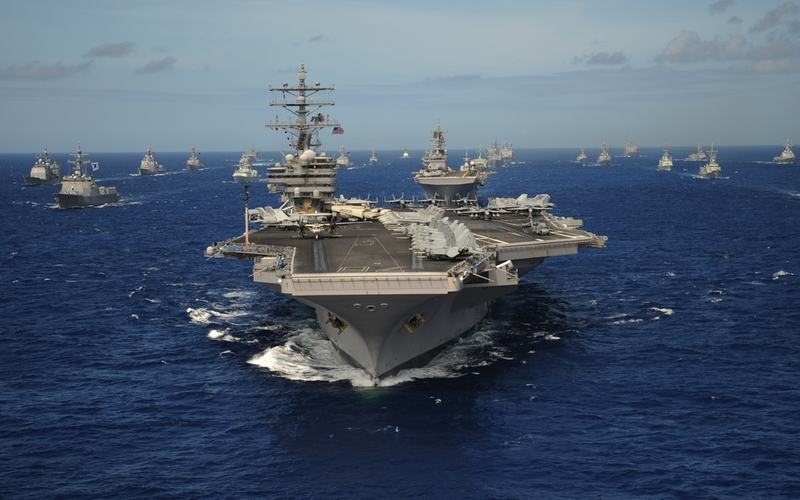
U.S. Navy guided-missile destroyers escorted two American-flagged merchant vessels through the Strait of Hormuz on Monday, the first such operation under President Donald Trump's newly announced Project Freedom initiative. U.S. Central Command reported the ships transited successfully and continued their journeys without incident, despite Iranian threats and reported attacks.
The operation began early Monday morning as part of efforts to restore commercial shipping through the vital waterway, which carries about 25% of the world's seaborne oil and 20% of liquefied natural gas. Trump announced the plan on Sunday, stating the U.S. military would guide ships from neutral countries out of the strait, warning that Iranian interference would be met with force. Project Freedom aims to assist around 2,000 vessels and 20,000 stranded mariners trapped in the Persian Gulf since Iran imposed restrictions.
CENTCOM clarified that while U.S. Navy ships remained in the vicinity to provide protection and share safe navigation lanes, avoiding Iranian mines, the operation focused on clearing a one-way path rather than direct escorts for all commercial traffic. Adm. Brad Cooper, CENTCOM commander, said U.S. forces destroyed six small Iranian boats and intercepted cruise missiles and drones launched at American assets and commercial vessels. The U.S. denied Iranian claims of striking a Navy vessel near the Strait.
Iran's Islamic Revolutionary Guard Corps rejected U.S. claims, calling them lies and asserting that no vessels transited the strait. Iranian forces fired warning shots near U.S. destroyers and launched attacks, including on a Panama-flagged tanker near the United Arab Emirates, though all crew were reported safe. Iran's military chief warned that any foreign forces entering the strait would face attack.
The transits come amid the ongoing 2026 Strait of Hormuz crisis, triggered by U.S.-Israeli airstrikes on February 28 that assassinated Iran's Supreme Leader Ali Khamenei and targeted nuclear and military sites. Iran closed the Strait on March 4, leading to attacks on merchant ships, mine-laying, and a near-total halt in traffic. This created dual blockades: Iran's on general traffic and a U.S. naval blockade on Iranian ports imposed on April 13. At least 12 seafarers have died in ship attacks, and oil prices surged, with Brent crude peaking above $126 per barrel.
Trump described the effort as humanitarian, aimed at freeing neutral ships facing food and health issues. U.S. officials emphasized a defensive posture while challenging Iran's control, with Navy ships positioned to deter aggression. The operation signals a potential shift toward reopening the strait, though risks remain high due to ongoing Iranian capabilities.

Comments
No comments yet. Be the first to share your thoughts.