
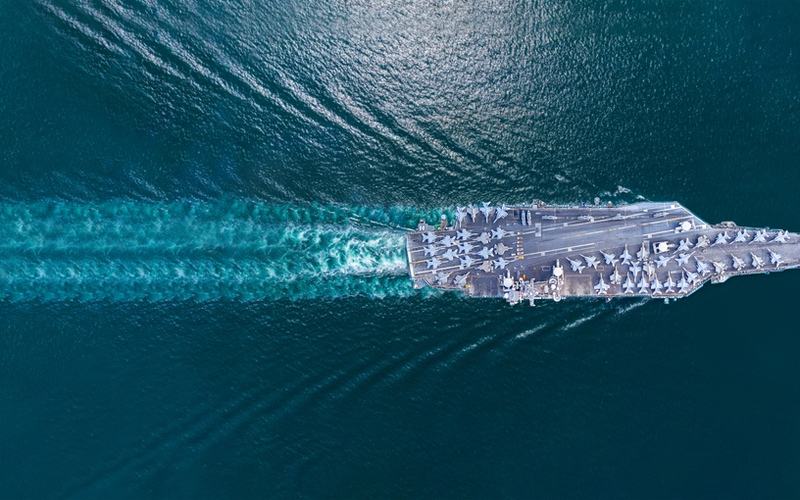
U.S. Central Command forces sank six small Iranian boats in the Strait of Hormuz on Monday after the vessels attempted to interfere with commercial shipping. The incident occurred as part of Project Freedom, an operation launched by President Donald Trump to reopen the vital waterway to global trade.
CENTCOM Commander Admiral Brad Cooper stated that Iran's Islamic Revolutionary Guard Corps launched multiple cruise missiles, drones, and small boats at ships under U.S. protection. "We have defeated each and every one of those threats through the clinical application of defensive munitions," Cooper said. U.S. Apache and SH-60 Seahawk helicopters were used to destroy the fast boats, while other assets intercepted the airborne threats. No damage was reported to U.S. forces or vessels they were defending.
The action supports Project Freedom, which involves guided-missile destroyers, over 100 aircraft, unmanned platforms, and 15,000 U.S. service members to secure passage through the strait. Two U.S.-flagged merchant ships successfully transited the waterway earlier in the day, marking initial progress in restoring traffic after weeks of disruption. Cooper noted that U.S. forces had contacted dozens of shipping companies in the past 12 hours, encouraging movement, and described the response as enthusiastic.
President Trump praised the operation on social media, saying Iran had "taken some shots" but caused little damage. He referenced sinking seven Iranian boats and warned that forces targeting U.S.-escorted ships would be "blown off the face of the Earth." Trump called the ongoing U.S. naval blockade of Iranian ports "one of the greatest military maneuvers ever done."
Iran denied the U.S. claims, with Revolutionary Guards stating no commercial vessels had crossed the strait and rejecting reports of sunk boats. Tehran also claimed to have struck a U.S. warship with missiles near Jask Island, an assertion CENTCOM dismissed. Separately, Iran launched missiles and drones at UAE oil facilities, injuring three people, and a South Korean cargo ship suffered an explosion in the strait.
The Strait of Hormuz, through which a fifth of global oil passes, has been a flashpoint since February 28, 2026, when U.S. and Israeli airstrikes initiated the current war with Iran. Iran blocked the strait in response, later imposing tolls on transiting ships. A U.S. naval blockade targeting Iranian ports began on April 13 after failed ceasefire talks in Islamabad. Previous U.S. actions included seizing Iranian-flagged vessels like the Touska on April 19.
A fragile ceasefire from April 8 has held unevenly, with Trump extending it indefinitely. U.S. Treasury Secretary Scott Bessent asserted "absolute control" of the strait, noting Iran's economy was in free fall due to the blockade. Gulf states condemned Iran's actions as piracy, and efforts continue to guide more ships through safely.

Comments
No comments yet. Be the first to share your thoughts.